3 Days in Rome: What We Actually Did in 54 Hours
Firsthand Rome
3 Days in Rome: What We Actually Did in 54 Hours
We returned to Rome with about 54 hours before our train to Venice. We repeated a few favorites, finally got inside St. Peter’s Basilica, and added an early-morning run and a trip out to the Appian Way.
Rome was our first stop before heading north to Venice and then on to a Mediterranean cruise. We’d been here once before, so this wasn’t about fitting every first-time attraction into a few days. There were places Kalie and I wanted to see again, especially the Colosseum and Roman Forum, and a few things we hadn’t managed to do on our first visit.
We ended up with about 54 hours in the city. We stayed across from the Aurelian Walls, revisited some of our favorite sights, spent a morning on the Appian Way, and ran through the historic center before sunrise. It was a busy couple of days, which is pretty normal for us when we’re working with a short window.
I wouldn’t necessarily recommend copying the pace of this itinerary, especially on a first visit. But if you’re wondering what you can realistically fit into parts of three days in Rome, here’s how ours went, including what I’d repeat and what I’d change.
Our 54-hour Rome itinerary at a glance
Day 1: Land in Rome, drop the bags, and start moving
Our Delta flight landed at Fiumicino at 9:20 AM on Sunday. We had arranged a private transfer into Rome and were supposed to meet my parents at the airport, but their flights were delayed. Kalie and I ended up taking the car on our own and meeting them later at the hotel.
I’ve become a fan of arranging airport transportation before a trip, especially after an overnight flight. I know we could figure out trains, taxis, or rideshare when we land, but I’d rather collect our bags, find our driver, and head straight to the hotel. There are plenty of things I enjoy figuring out as we go. Getting from the airport to the hotel isn’t one of them.
This is the private FCO-to-Rome transfer we booked.
Staying at The Tribune, JdV by Hyatt
We stayed at The Tribune, JdV by Hyatt, near Villa Borghese. It’s a boutique-style hotel with a purple theme that sounds a little strange on paper but worked surprisingly well in person. We booked with Hyatt points and had two separate reservations because we changed room categories: a standard king room the first night and a junior suite with a balcony and city view the second.
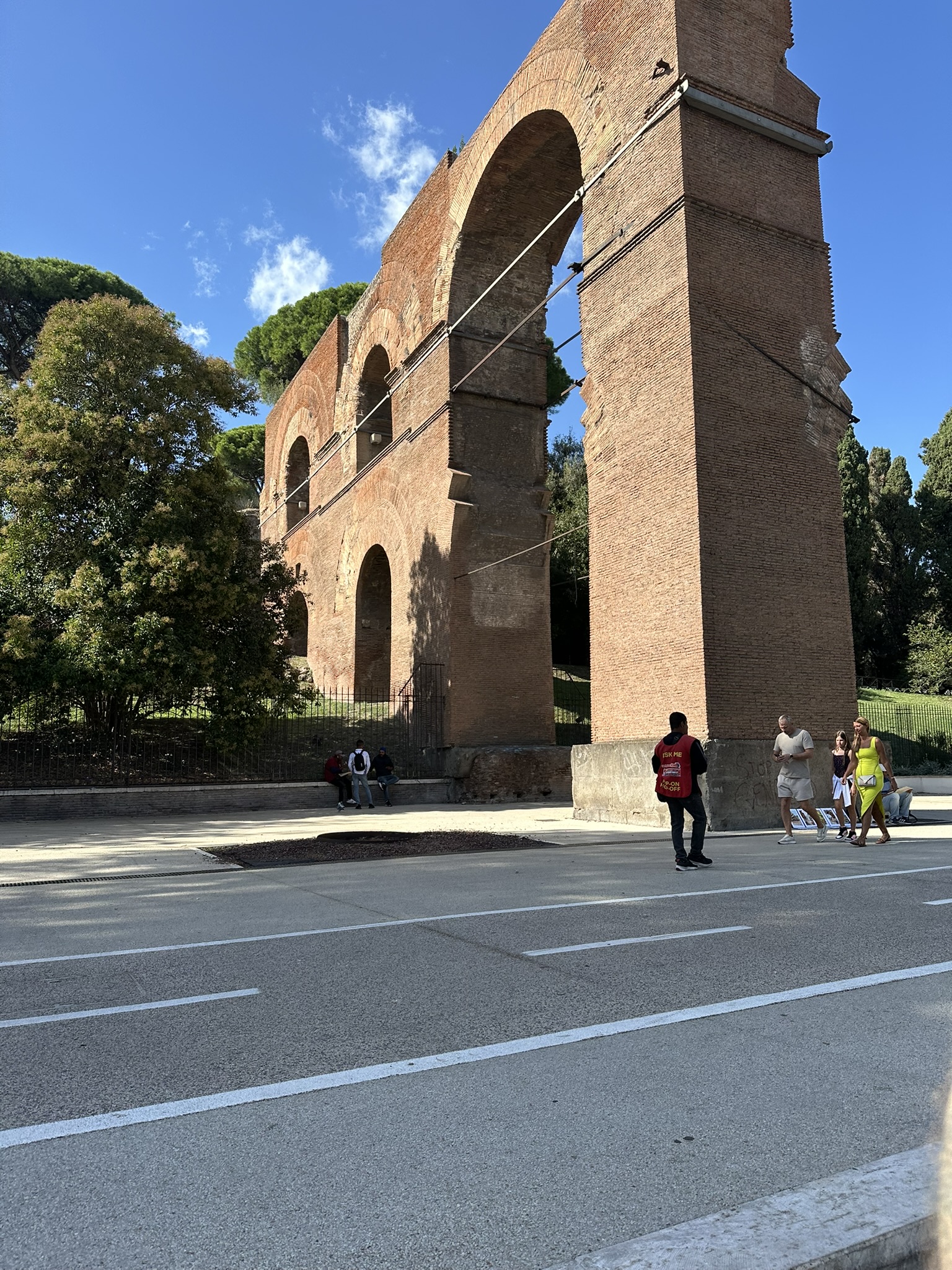
What I remember most about arriving isn’t the lobby or the room. It’s the huge section of the Aurelian Walls directly across Via Campania. The walls were first built around Rome in the third century AD, and the section opposite the hotel was raised and rebuilt in the early fifth century. It reaches roughly 39 feet high. We could look out from our hotel and see an actual part of Rome’s ancient defenses. I loved that.
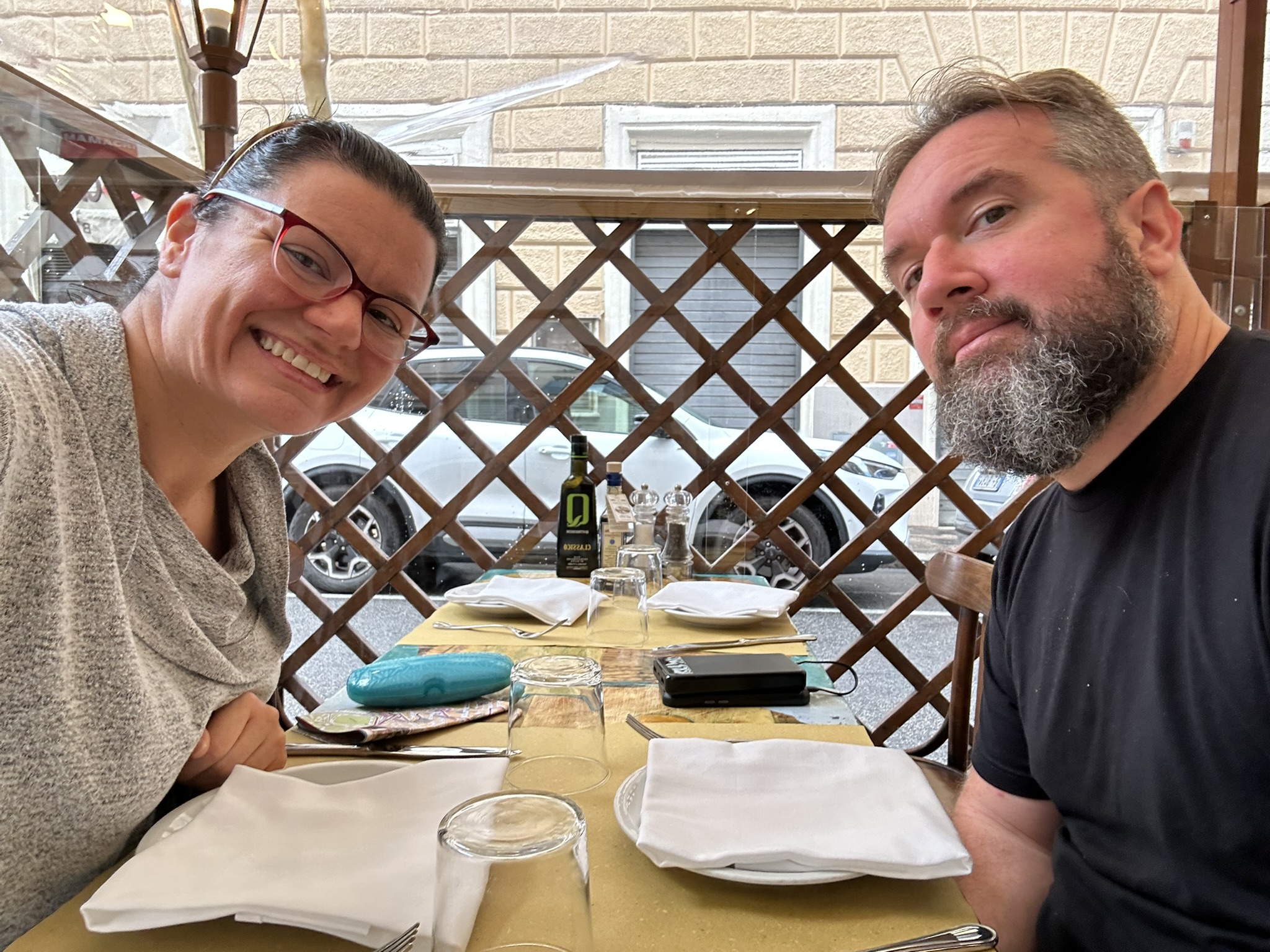
We arrived too early to get settled, so we dropped the bags and went looking for lunch. We picked an outdoor restaurant that looked good enough and ordered pizza, pasta, bread, and olive oil. It wasn’t a meal I’d make a special trip back for, but sitting outside in Rome after an overnight flight was exactly what we wanted. I also got my usual reminder that Coke Zero and Diet Coke are not the same thing.
Why I like doing an orientation tour on the first day
We had a private golf-cart tour booked for 1:00 PM. I like doing an orientation tour early, whether that’s on foot, by bike, or in a golf cart. It gives me a sense of where things are and how the neighborhoods connect before we start spending serious time at individual sites.
Our route covered or passed many of Rome’s big sights, including the Pantheon, Trevi Fountain, Vittoriano, Colosseum, Roman Forum, Spanish Steps, Piazza Navona, and Vatican City. Since we’d already been to several of them, we weren’t trying to absorb everything like it was our first time. It was a good way to get reacquainted with the city and decide what we wanted to revisit over the next two days.
This is the private Rome golf-cart tour we booked.
A run through Villa Borghese
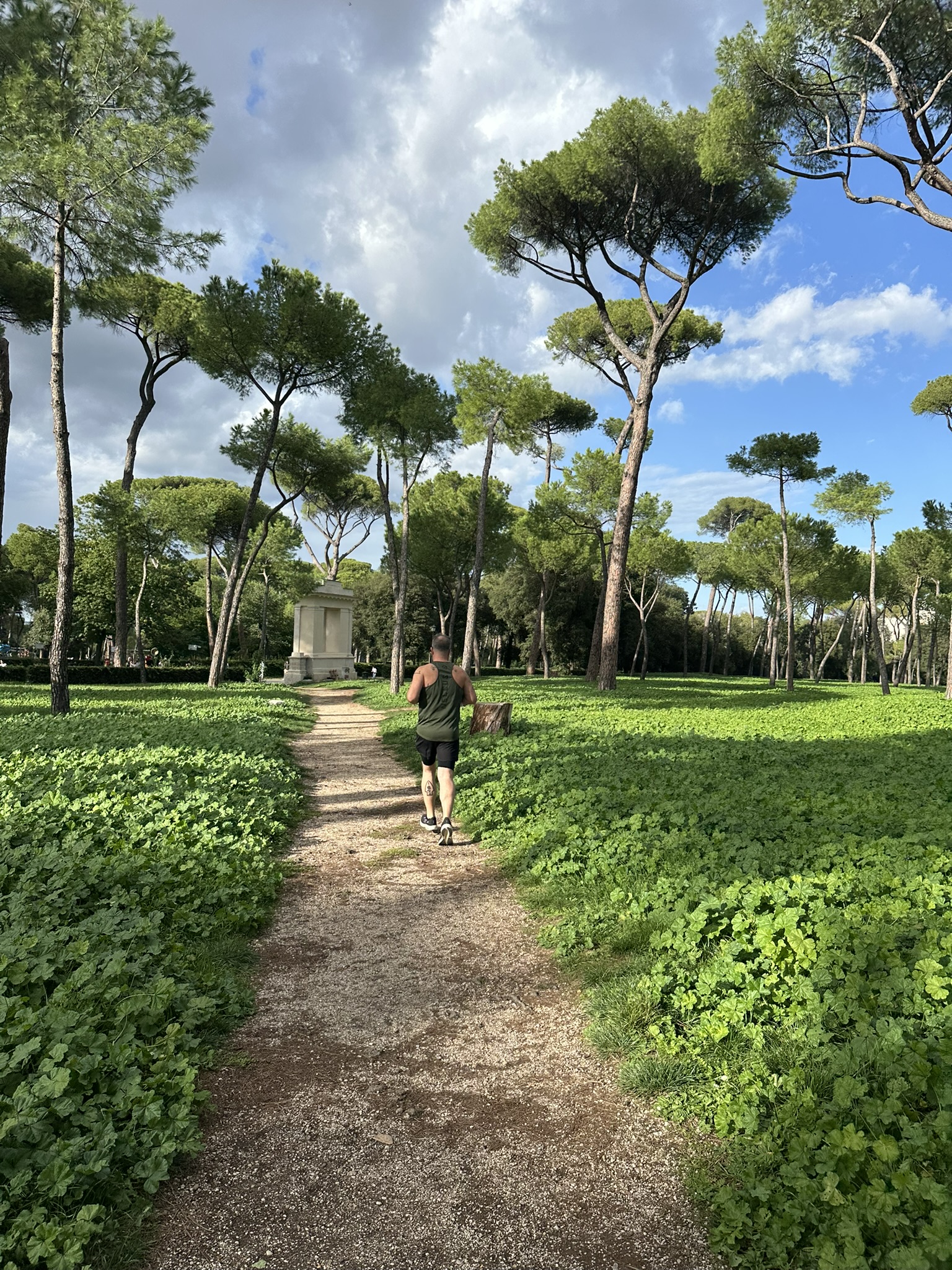
After the tour we finally caught up with my parents, got everyone settled, and headed back out. Kalie and I went for a run through Villa Borghese, the big park next to our hotel. We hadn’t spent much time there before, and I wasn’t expecting anything beyond an easy run in a nice park.
Instead, we came across an event with a whole collection of exotic Italian cars. It was a completely unplanned stop, and one of those little things that reminds me why I don’t like scheduling every minute of a trip.
Dinner above the Aurelian Walls
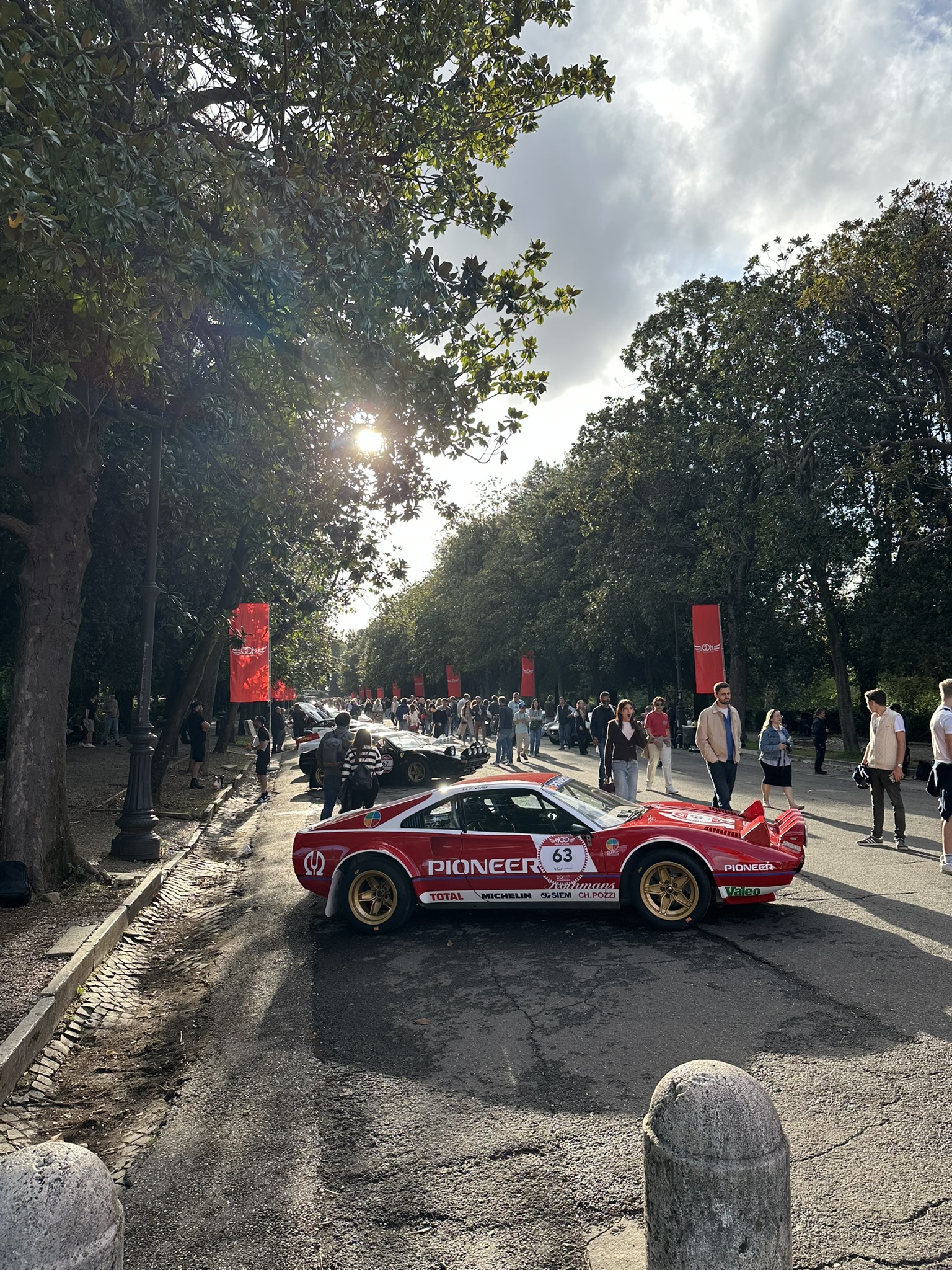
That night we ate at Terrazza Borghese, the rooftop restaurant on the seventh floor of The Tribune. We’d been looking at restaurant options separately and then realized the one we liked was inside our own hotel, so that was an easy decision.
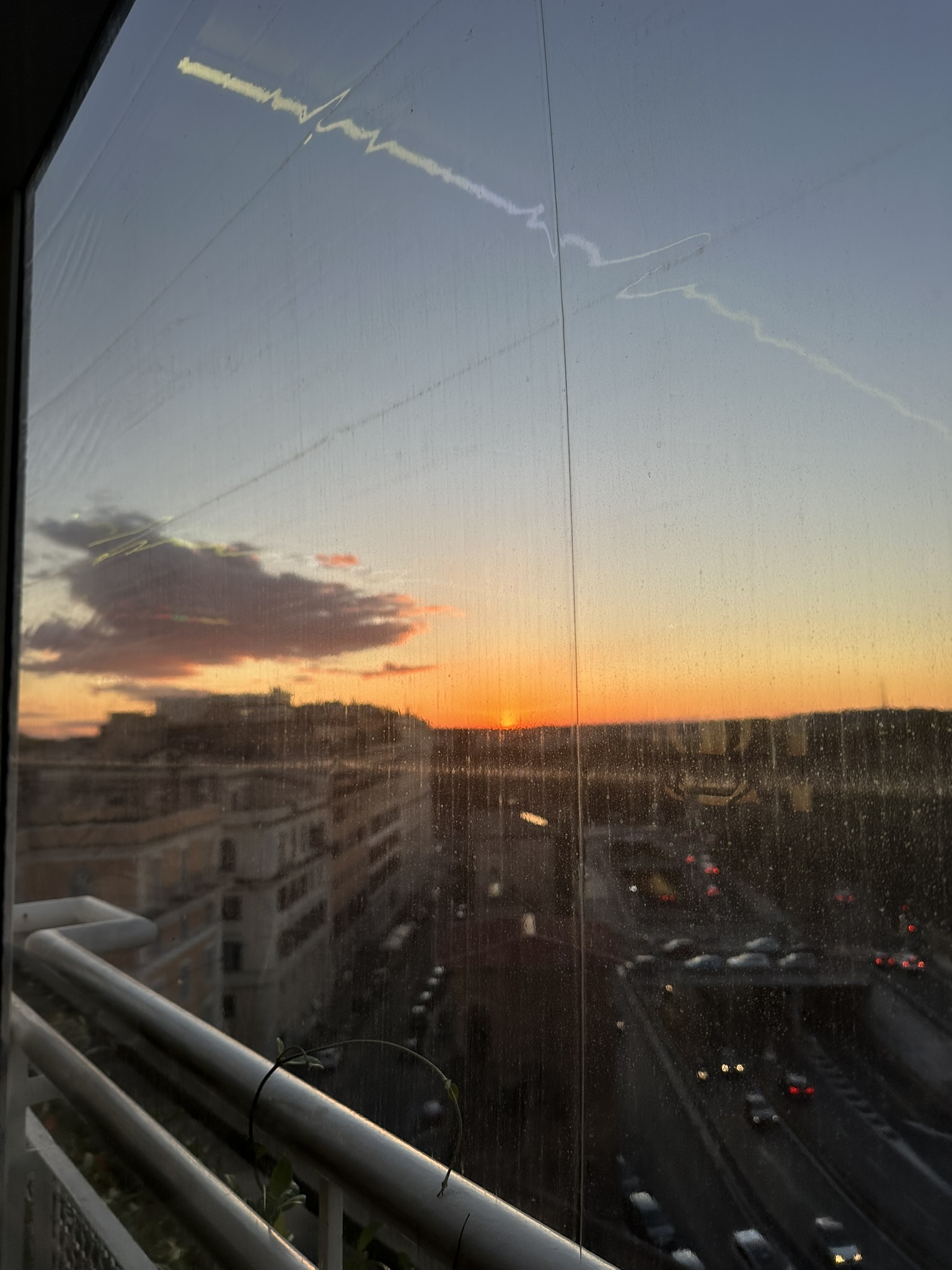
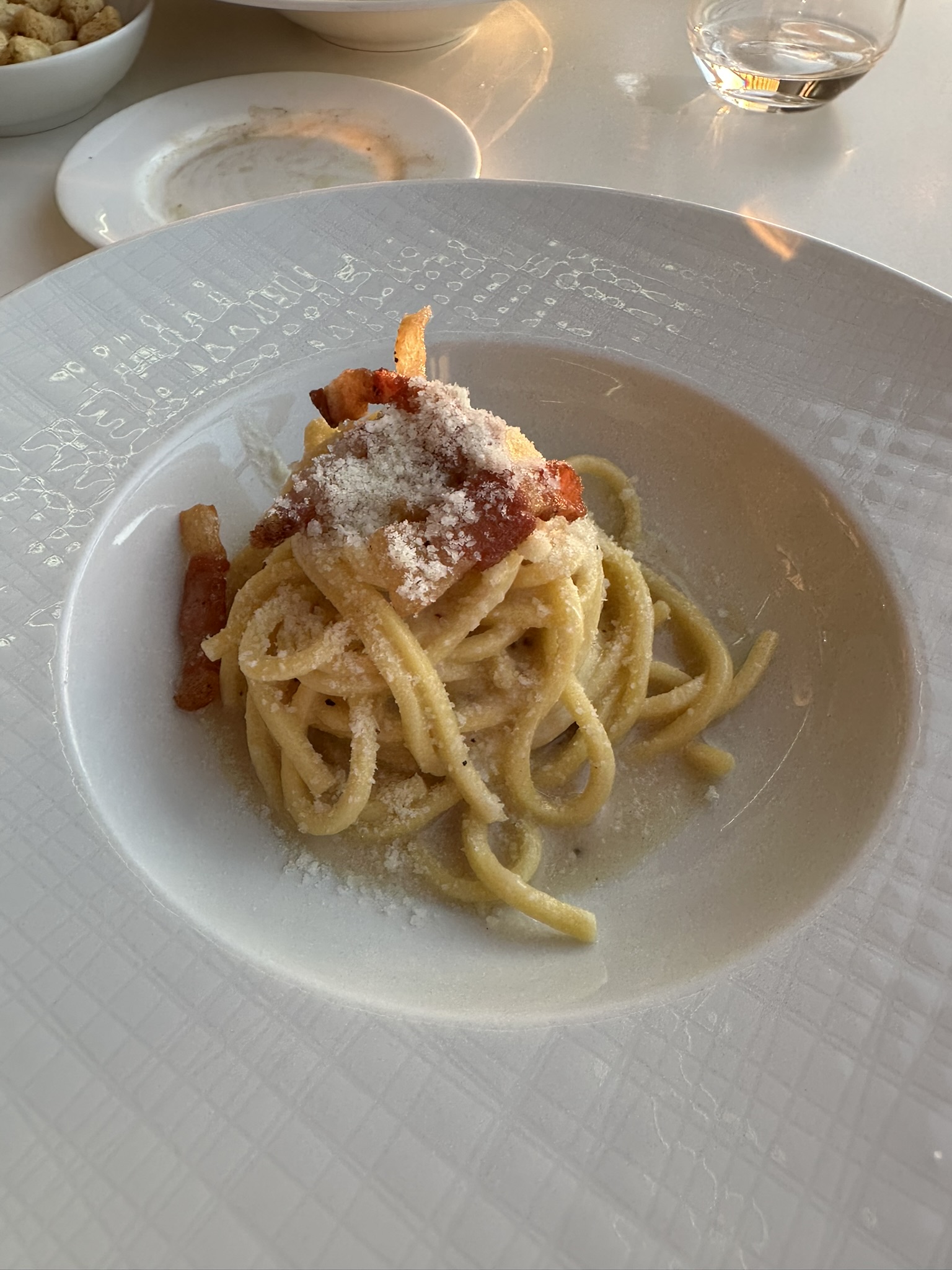
We ordered gricia and carbonara to share, along with steak and potatoes, and finished with a Pavlova while the sun went down over Rome. The rooftop setting was a big part of the appeal. After an overnight flight and a full day of walking and sightseeing, it was nice to have dinner upstairs instead of figuring out one more cross-city trip.
Day 2: St. Peter’s, ancient Rome, and one very full day
Monday was the day we probably pushed the schedule the hardest. We had a St. Peter’s Basilica tour starting at 8:45 AM and a Colosseum Underground tour booked for 11:00. The timing was tight, and by the end of the morning we had learned exactly why stacking two major reservations that close together can be risky.
St. Peter’s Basilica without repeating the Vatican Museums
We had visited the Vatican Museums and Sistine Chapel on our first trip to Rome, but we hadn’t been able to go inside St. Peter’s Basilica. This time we picked a tour focused on the Basilica, the Vatican Grottoes, and the dome instead of spending another day in the museums. I’m glad we’d already done the museums, but repeating them wasn’t a priority on such a short visit.
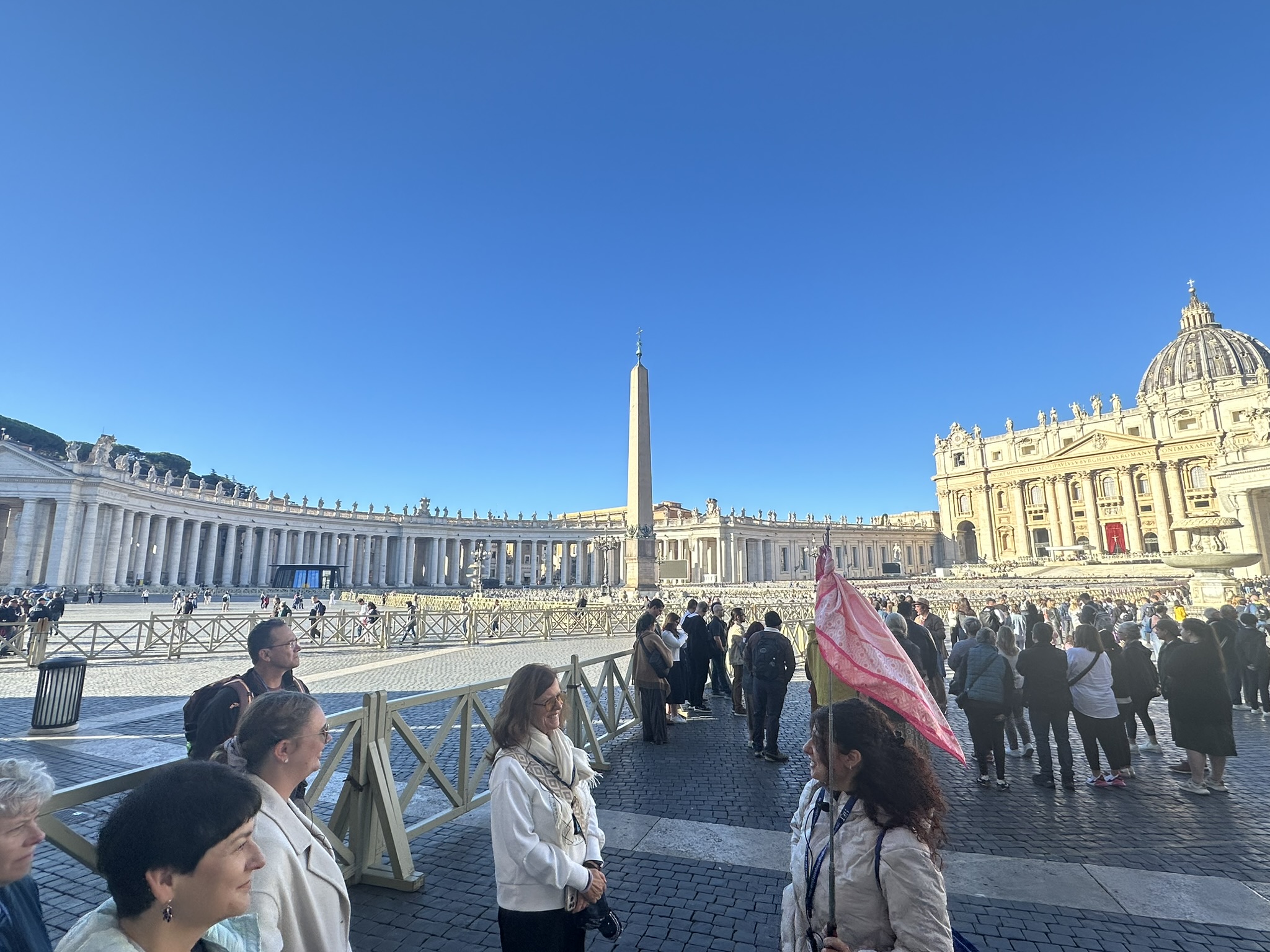
St. Peter’s Square is impressive before you even get through the doors. The colonnades are lined with 140 statues of saints, each more than 10 feet tall, and there’s an obelisk in the middle of the square. The scale is hard to appreciate in photos, and somehow the inside of the Basilica feels even bigger.
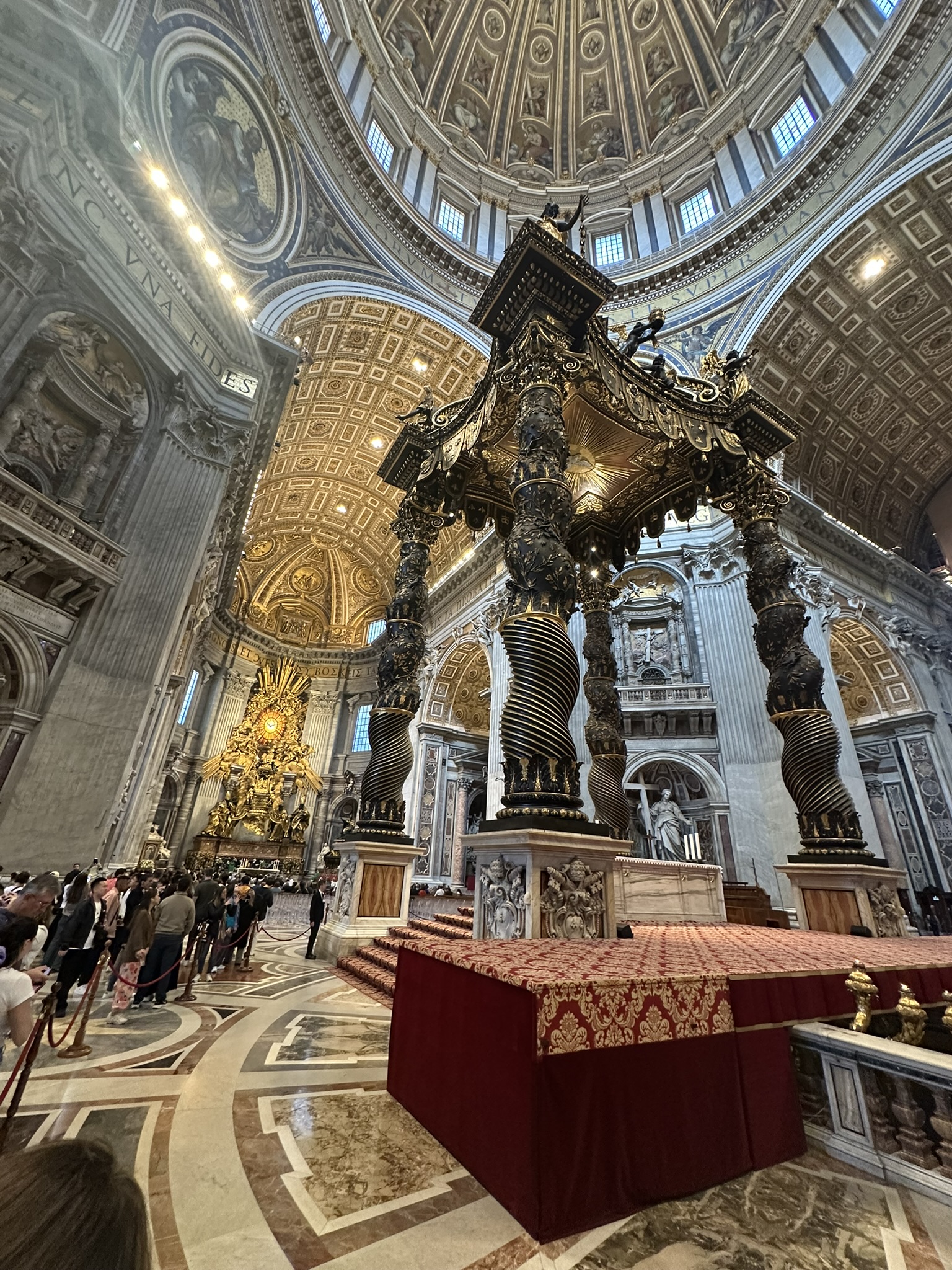
One of my favorite things inside was Bernini’s Baldachin, the bronze canopy over the papal altar. It’s about 95 feet tall, which is an absurd thing to find inside a building. We also saw his Cathedra Petri at the far end of the Basilica, with the glowing Holy Spirit window above it. I hadn’t planned on paying so much attention to Bernini on this trip, but his work kept showing up everywhere we went.
Seeing Michelangelo’s Pietà with Kalie
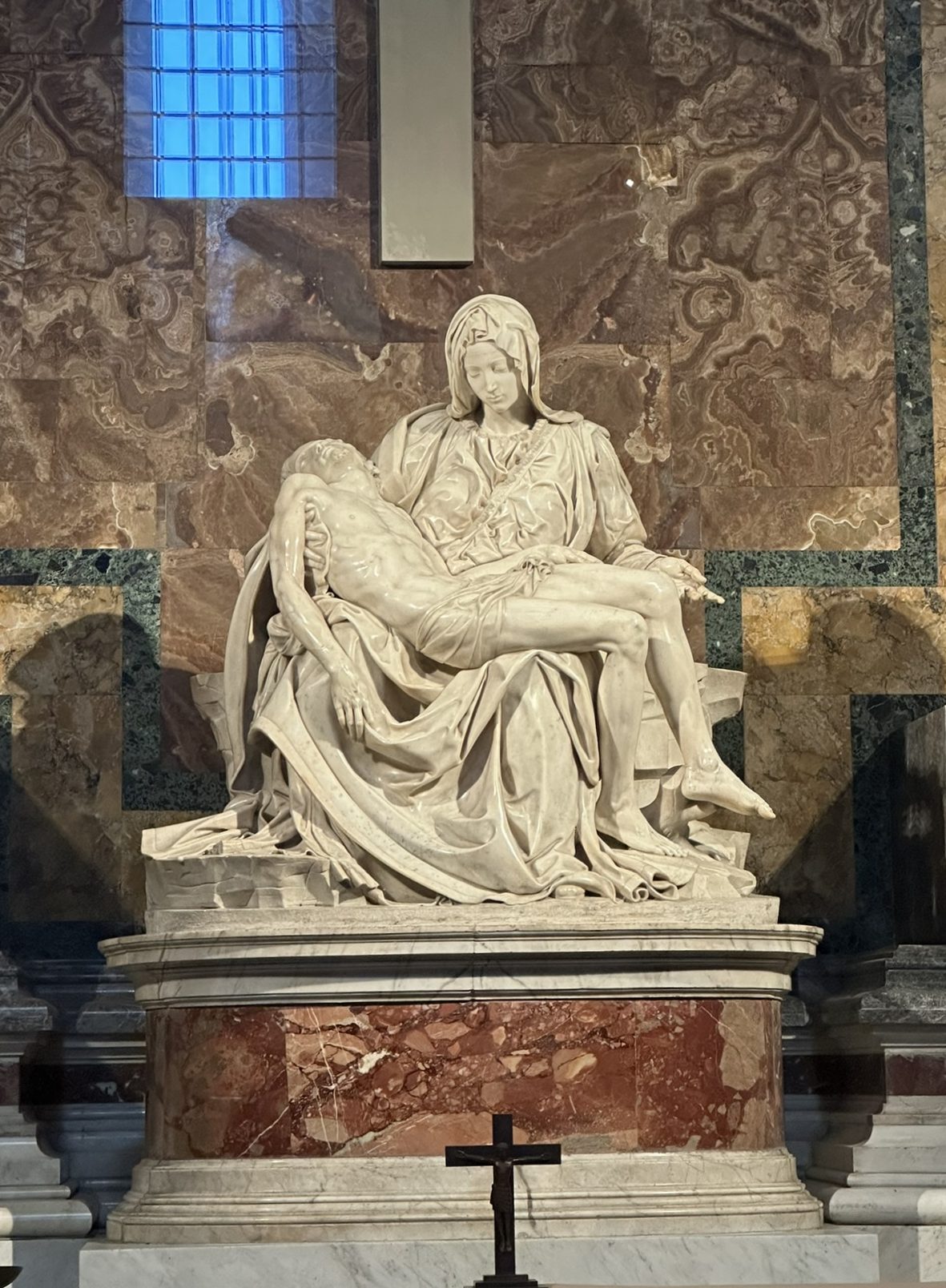
The part that meant the most to us was seeing Michelangelo’s Pietà. Kalie had written a college paper about it years earlier, at a time when she couldn’t really imagine seeing the actual sculpture in Rome. Standing there together was one of those moments we remembered long after we’d left the church. We’d read about and seen photos of so much of Rome before our trips, but there’s a difference when the real thing is right in front of you.
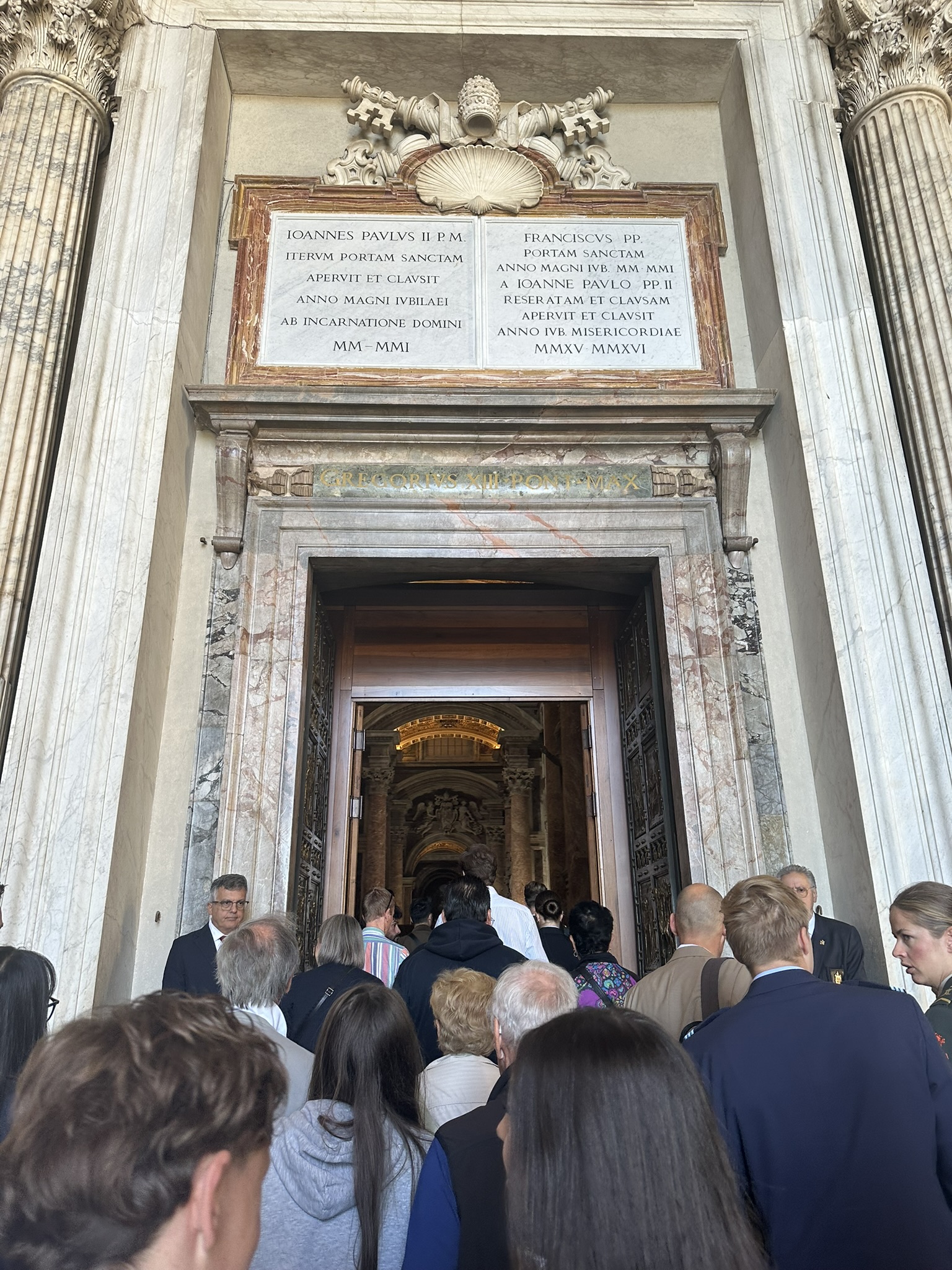
We were also visiting during the 2025 Jubilee and were able to walk through the Holy Door. That’s something we couldn’t have planned to do on just any trip to Rome, so I’m glad the dates happened to work out.
The dome climb we didn’t get to do
The tour was supposed to include the dome climb, but the group ran behind schedule. Eventually we had to decide whether to keep waiting or leave to make our Colosseum reservation. We chose the Colosseum and missed the dome, which ended up being the only big item on our Rome plan that didn’t happen.
I would make the same decision again given the circumstances, but I wouldn’t put those two tours that close together if climbing the dome were a top priority. That’s one of the things we’ll save for our next visit.
Back to the Colosseum and Roman Forum
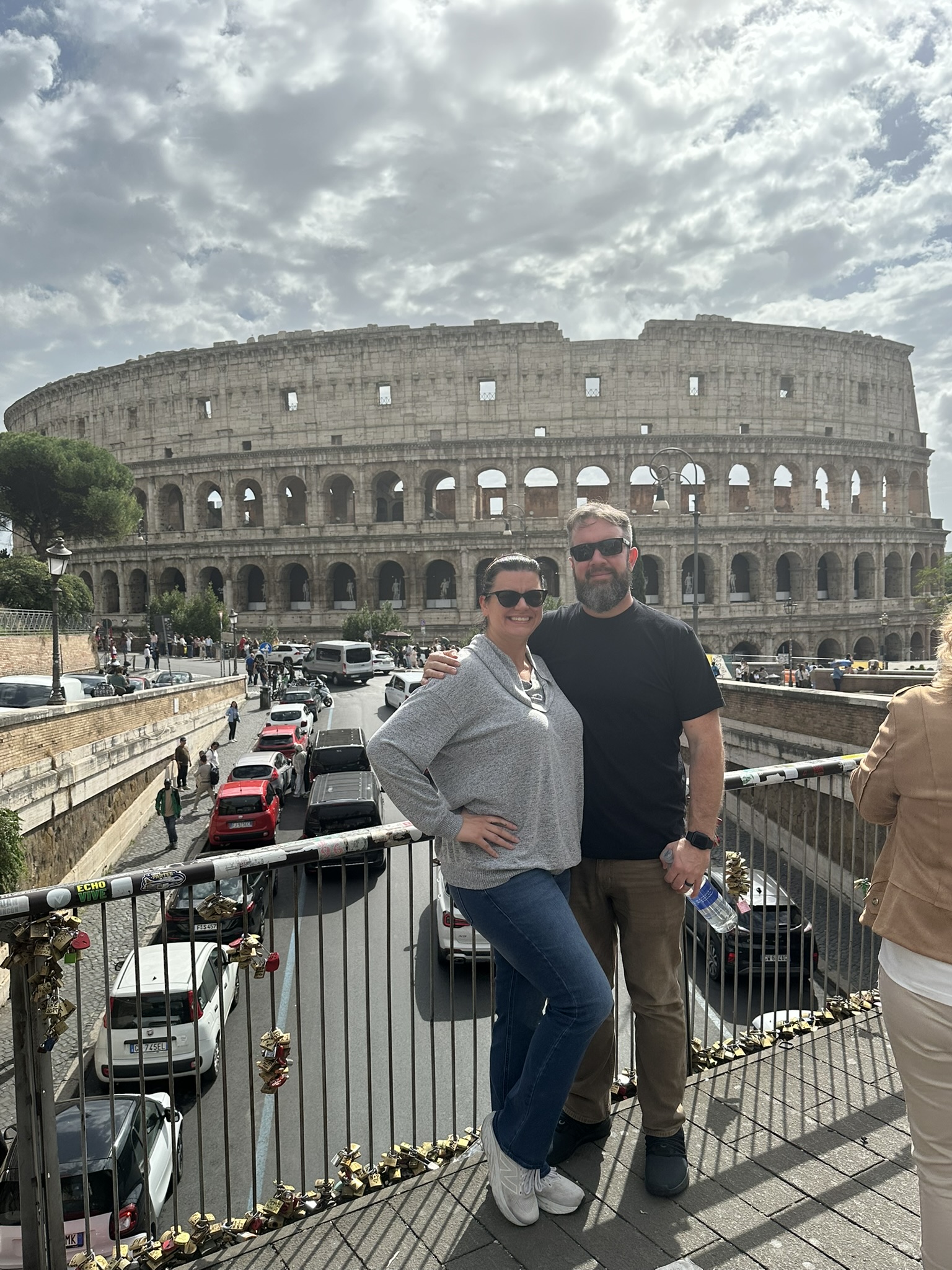
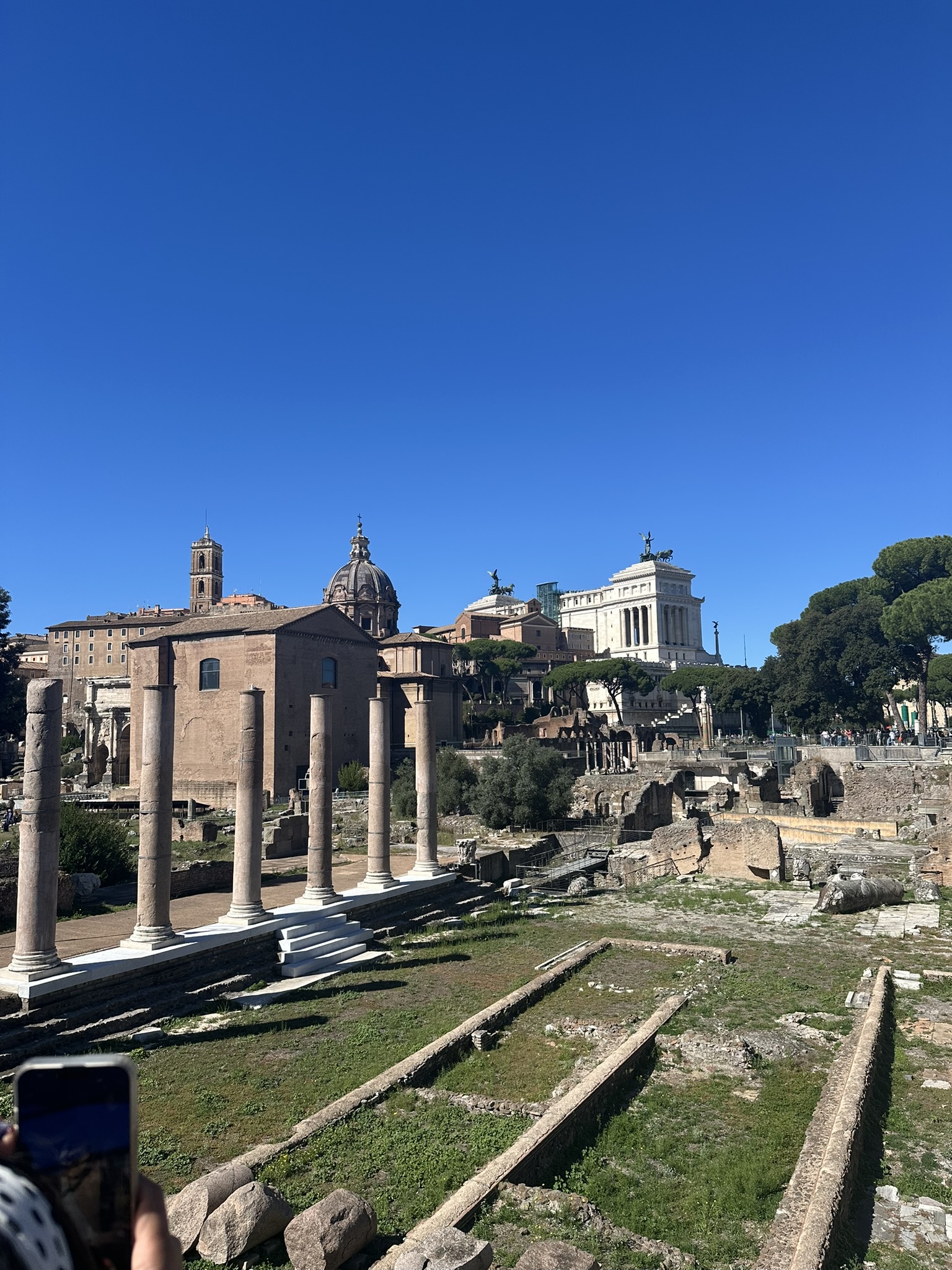
We went back to the Colosseum, Roman Forum, and Palatine Hill even though we’d done essentially the same experience on our first Rome trip. We enjoyed it enough the first time that we wanted my parents to see it, too. It also helps having a guide explain what you’re looking at, especially in the Forum, where there are so many buildings and ruins packed into one area.
This is the Colosseum Underground and Ancient Rome tour we booked.
One practical detail from our first visit is worth passing along: bring the physical identification required by your ticket. I didn’t have my passport with me the first time, though Kalie did. They happened to accept a photo of mine on my phone, but I wouldn’t count on that happening again.
I particularly like the Temple of Antoninus and Faustina in the Forum. Its surviving columns are about 56 feet tall, and the Church of San Lorenzo in Miranda was later built into the ancient structure. You’re looking at parts of a Roman temple and a much later church in the same building. We also walked past the Arches of Titus and Septimius Severus, which are especially interesting once you’ve seen later triumphal arches elsewhere in Europe.
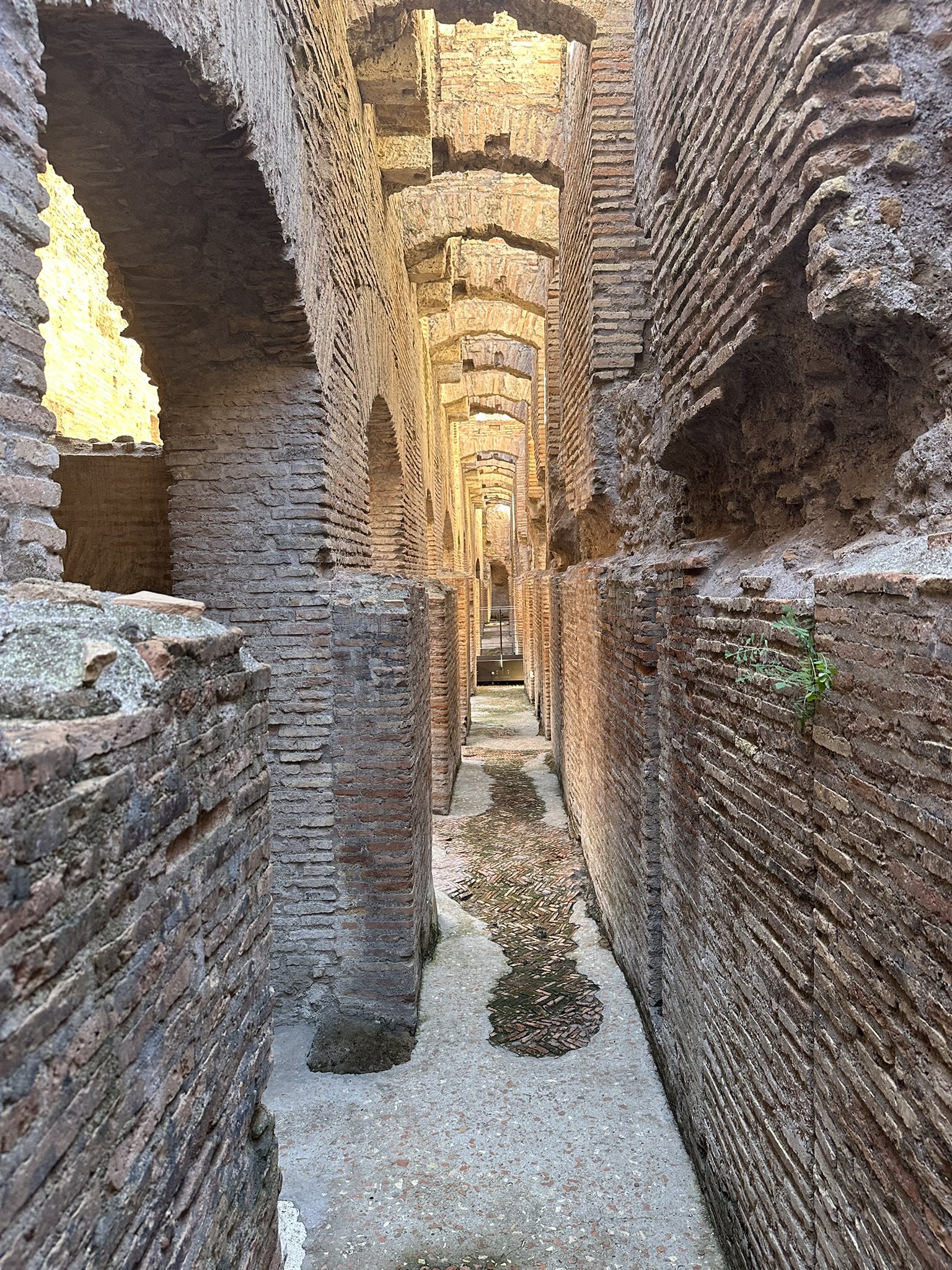
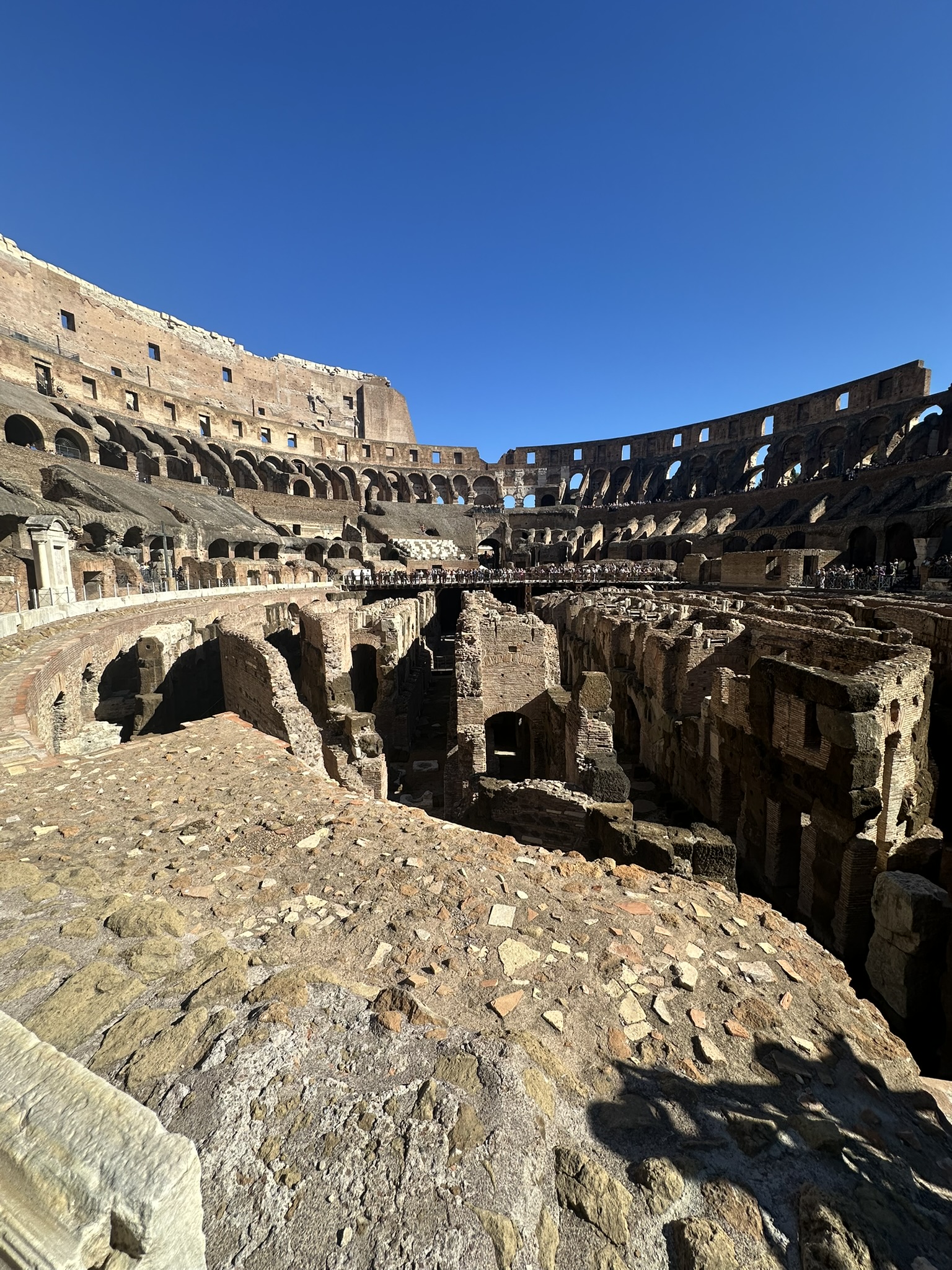
The underground part of the Colosseum was worth repeating, too. Instead of looking down at the arena from the seating areas, you walk through the spaces where animals, gladiators, equipment, and machinery moved beneath the floor. There was also a projected presentation showing how gladiators might have moved through the tunnels. I liked the extra context, but simply being able to see that part of the building was the reason to book the underground access.
A break in Monti, the Vittoriano, and Mamertine Prison
After the tour we stopped at Caffè Roma, a small place uphill from the Colosseum with outdoor seating and a view of the monument. I wouldn’t make any special claims about the food, but for a quick coffee, drink, pastry, or slice of pizza between stops, the location is hard to beat.
This is also the area where I’d tell visitors to ignore people trying to hand them bracelets, flowers, or other random things. We had more of that kind of tourist hassle around the Colosseum than we wanted, and the easiest response was to keep walking.
From there we passed the Vittoriano, the enormous white monument also called the Altare della Patria or the “wedding cake.” The equestrian statue of Victor Emmanuel II looks almost ordinary at a distance because the monument around it is so big, although 21 people famously had lunch inside the bronze horse before it was installed. We also visited the Mamertine Prison, or Carcer Tullianum, whose underground chambers are associated in Christian tradition with the imprisonment of Peter and Paul. It was a memorable contrast to the open spaces of the Forum.
The Pantheon is still one of my favorite places
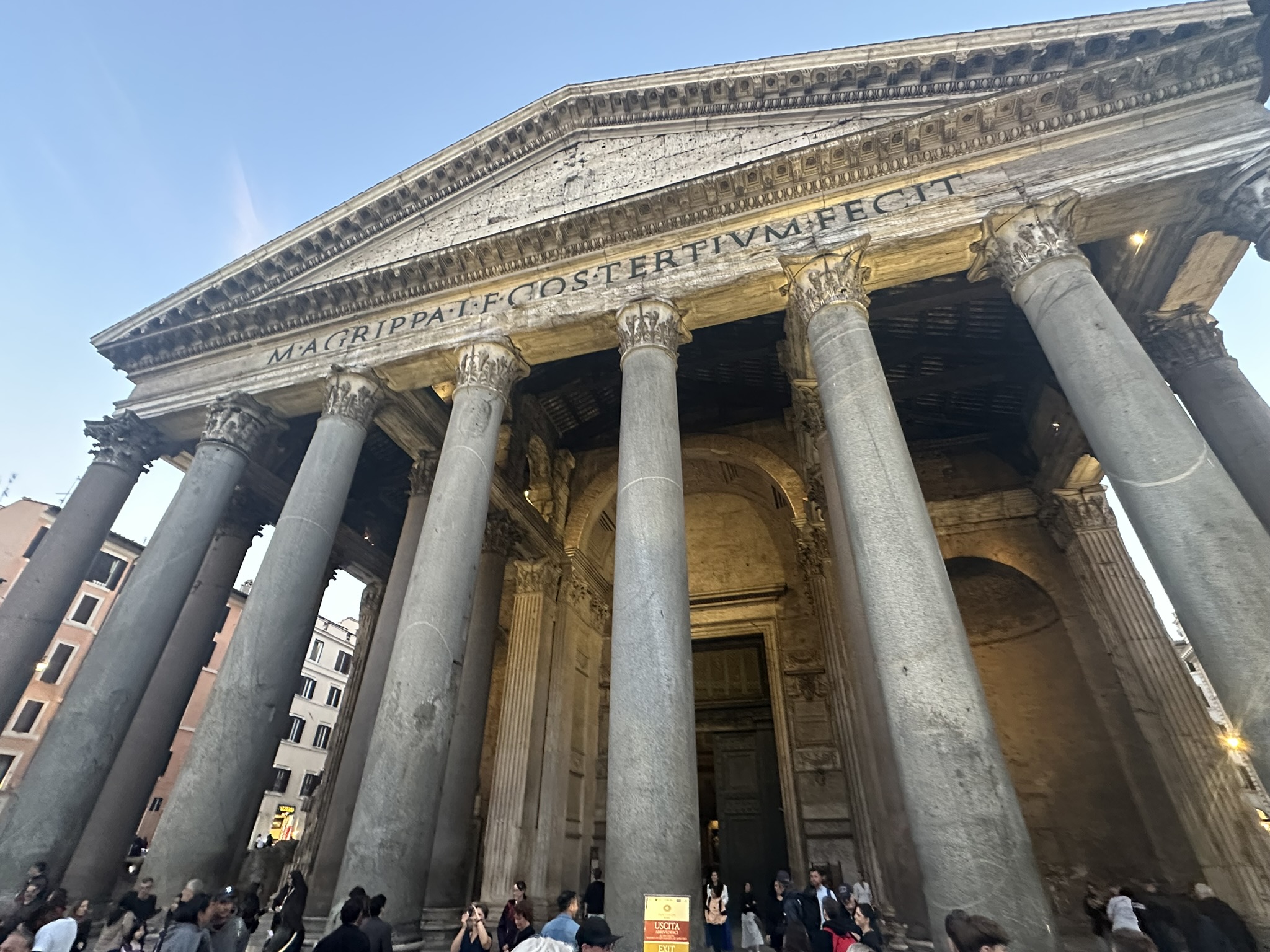
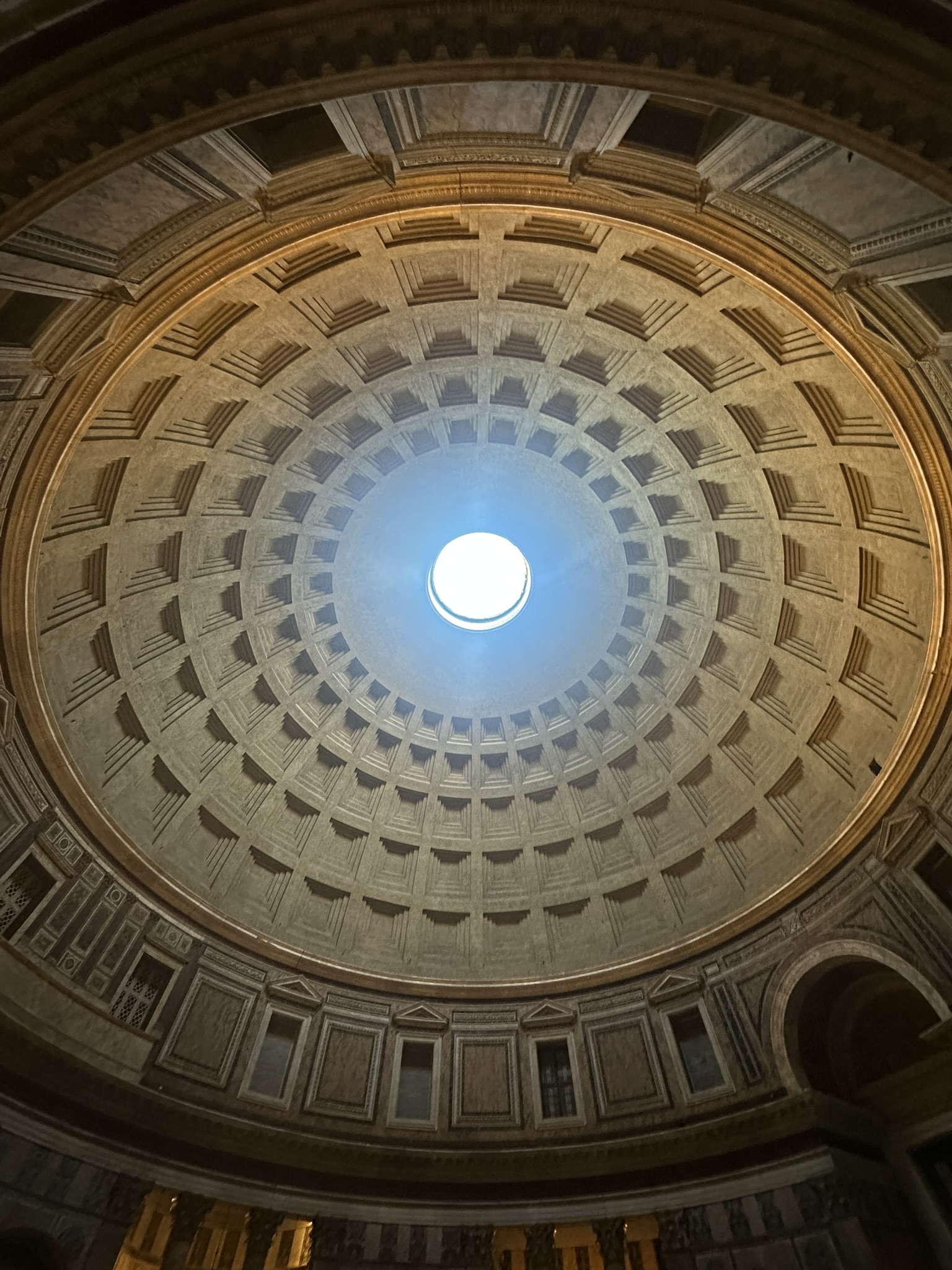
We also made it back to the Pantheon, which might be my favorite building in Rome. St. Peter’s has the sheer size and artwork, and the Colosseum has the history everyone recognizes, but the Pantheon is the one I keep thinking about because of how it was built. The interior is roughly 142 feet across, and the dome rises about the same distance above the floor. That nearly 2,000-year-old concrete dome still has a huge open oculus in the center.
On our first trip, we had finished a late dinner, turned a corner, and suddenly found ourselves standing in front of the Pantheon. I think that surprise is part of why I like it so much. Even now, it feels strange that a building like this is sitting right among ordinary streets, cafes, and shops.
Piazza Navona, dinner, and Rome after dark
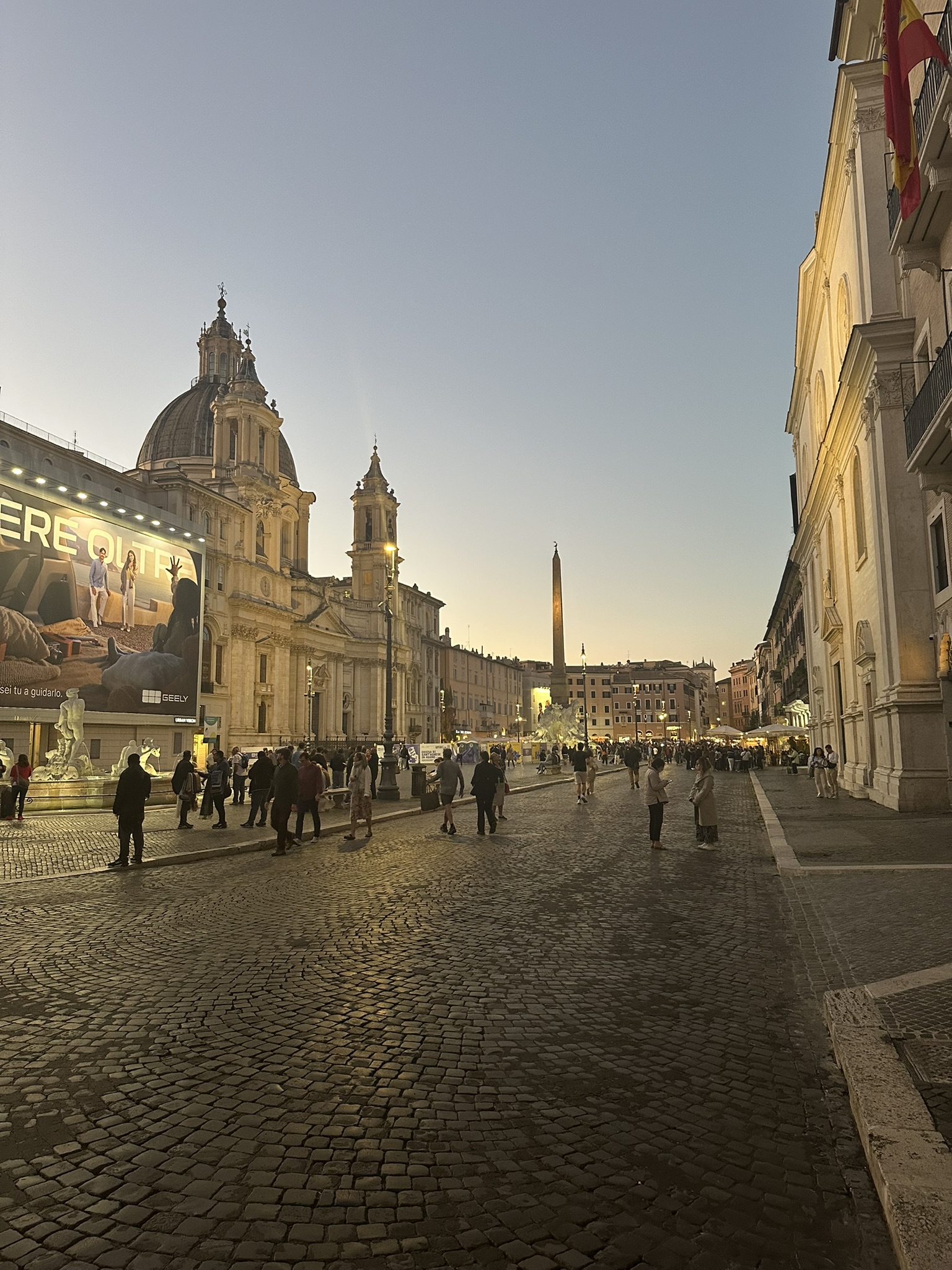
We continued toward Piazza Navona, which is another place I really like in the evening. There were people wandering between the outdoor restaurants, fountains, and street performers, and it had plenty of activity without feeling like a nightlife district. In the middle of the square is Bernini’s Fountain of the Four Rivers with the tall Agonale Obelisk. We would end up seeing where that obelisk came from the next morning on the Appian Way.
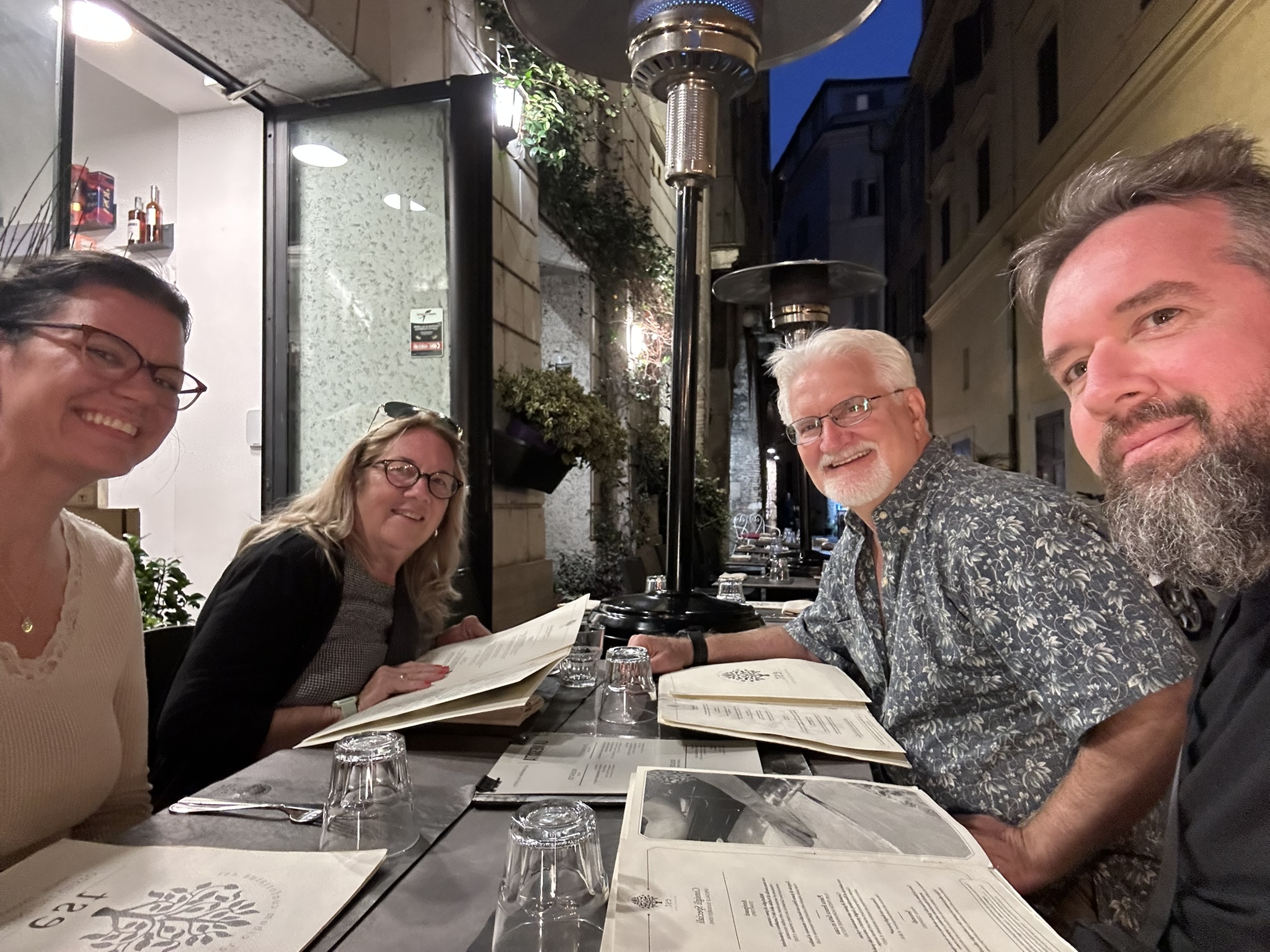
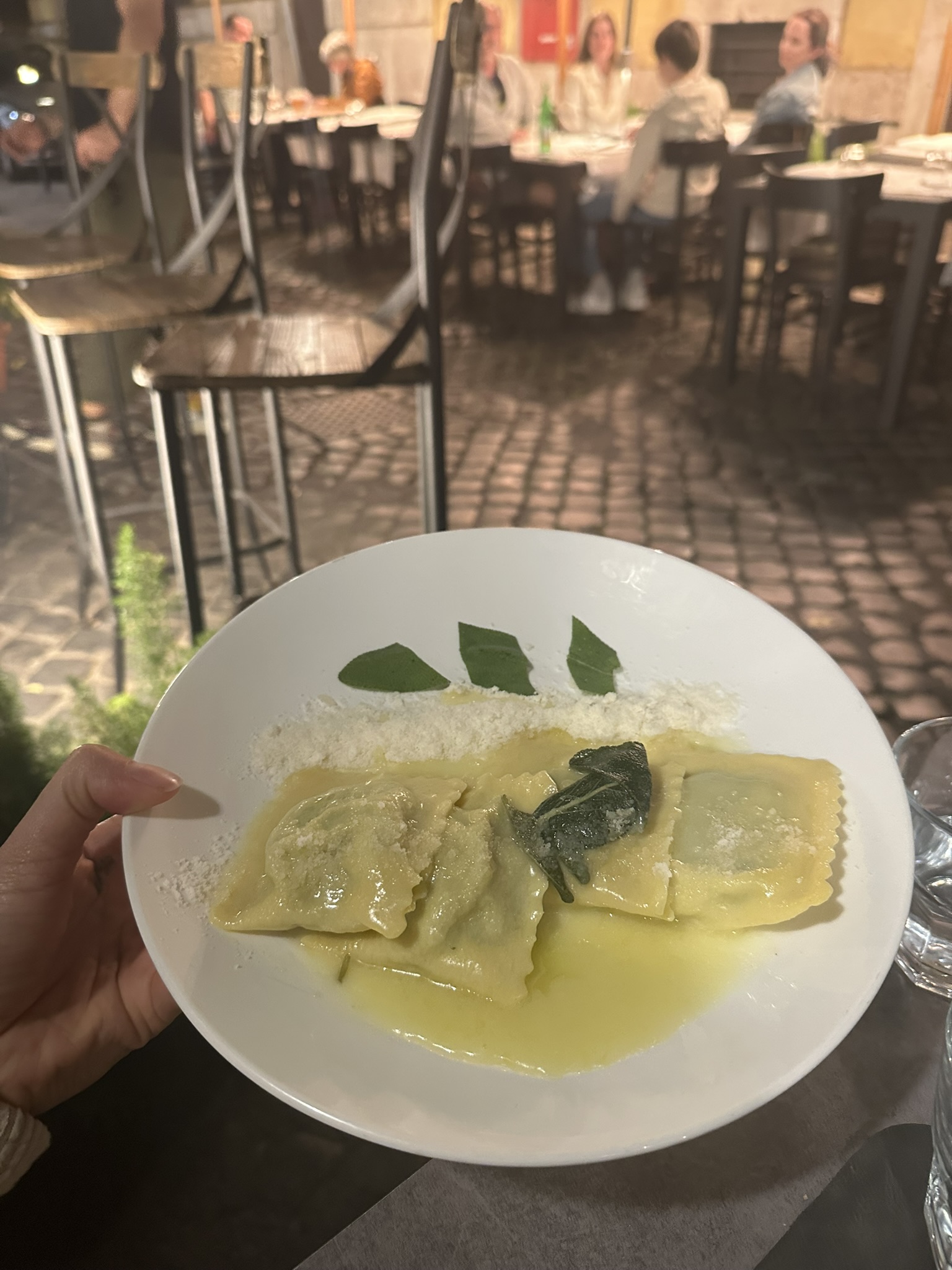
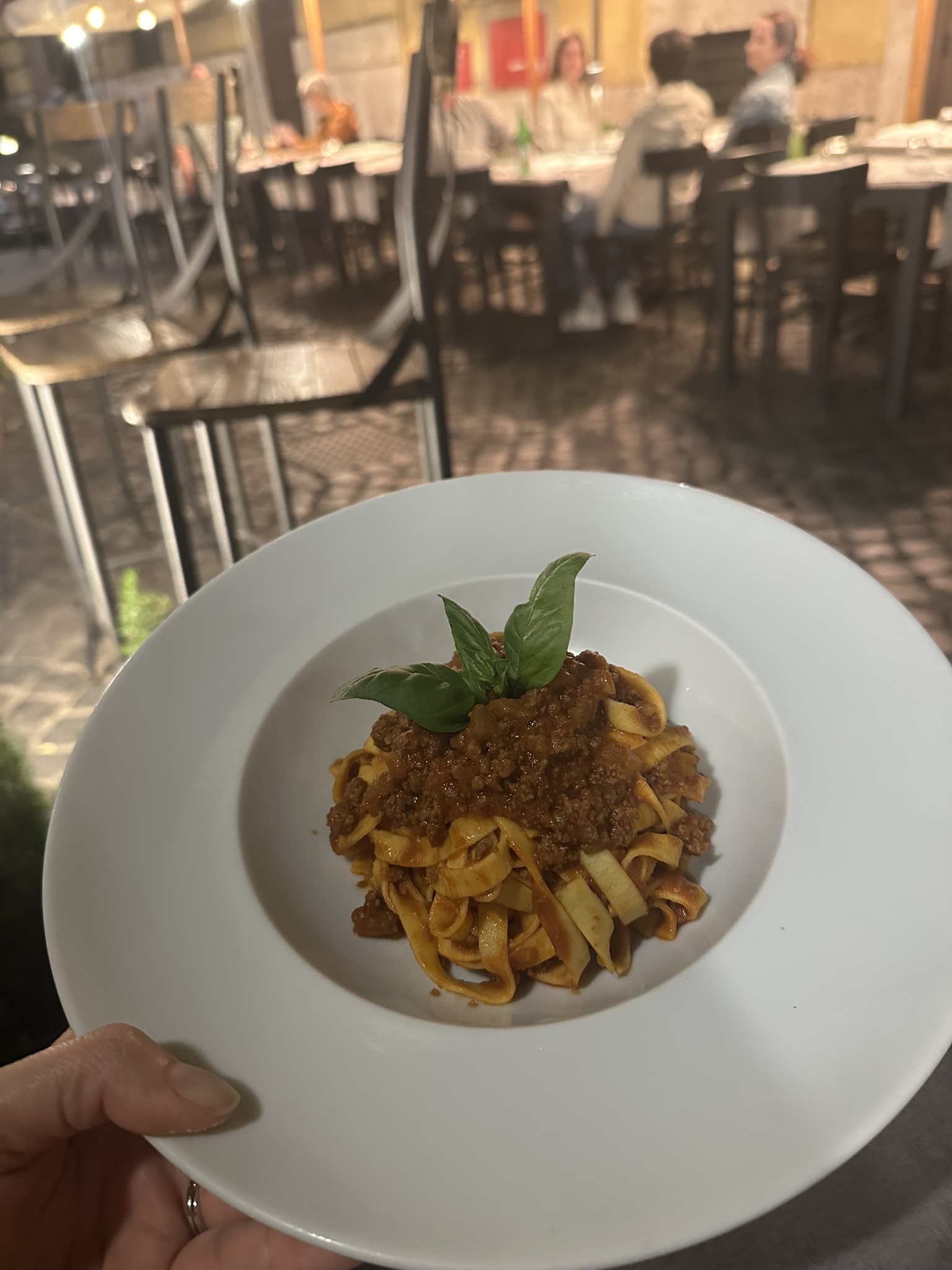
We took my parents to Est – Artigiani del Gusto, a restaurant Kalie and I had enjoyed on our previous visit. We ordered buffalo mozzarella with tomatoes and basil, pasta, ravioli with sage butter, ragù, and steak. By the time we finished, Piazza Navona was even livelier. We walked back through the Pantheon area, stopped for gelato, and eventually headed toward Trevi Fountain.
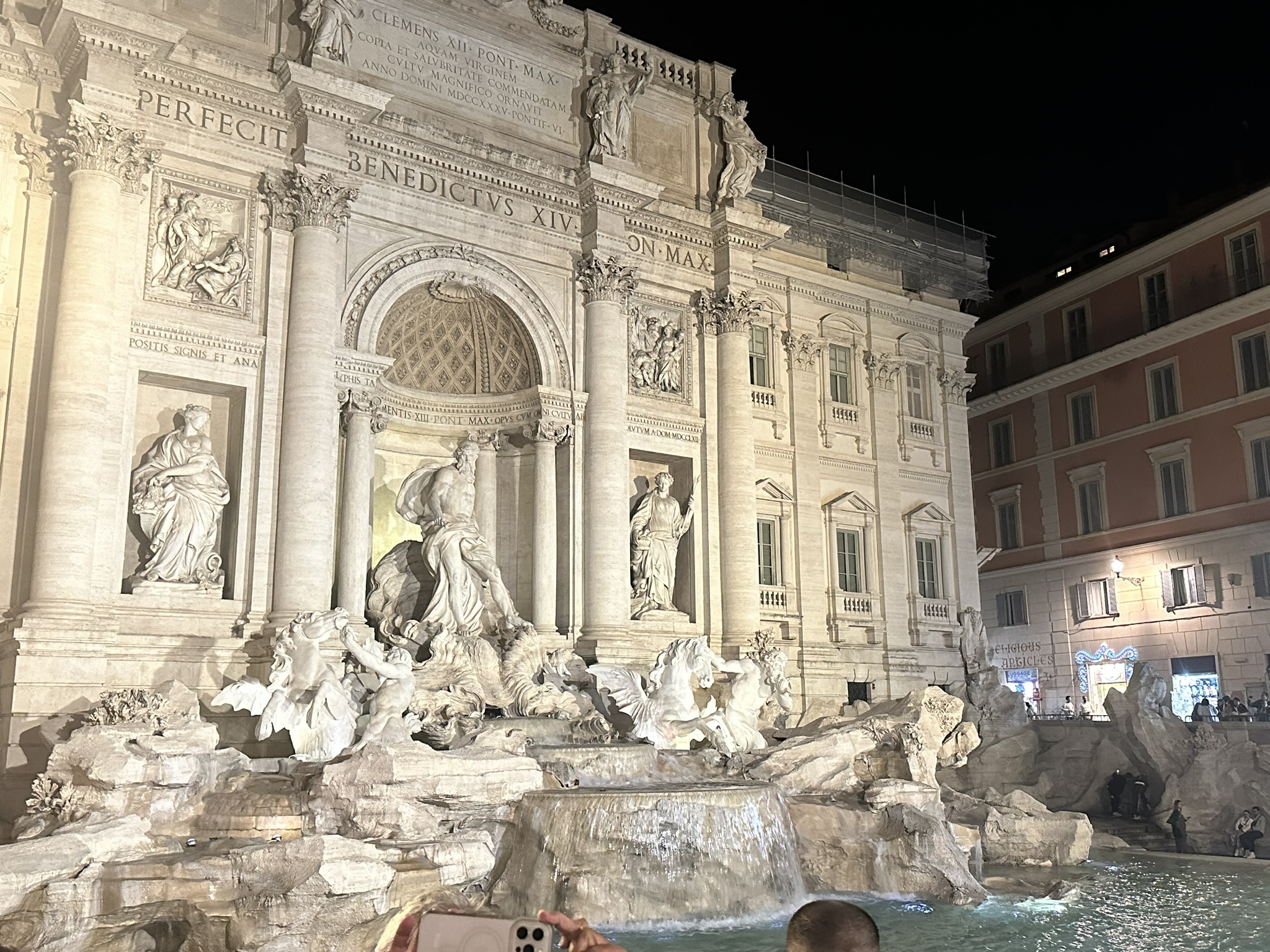
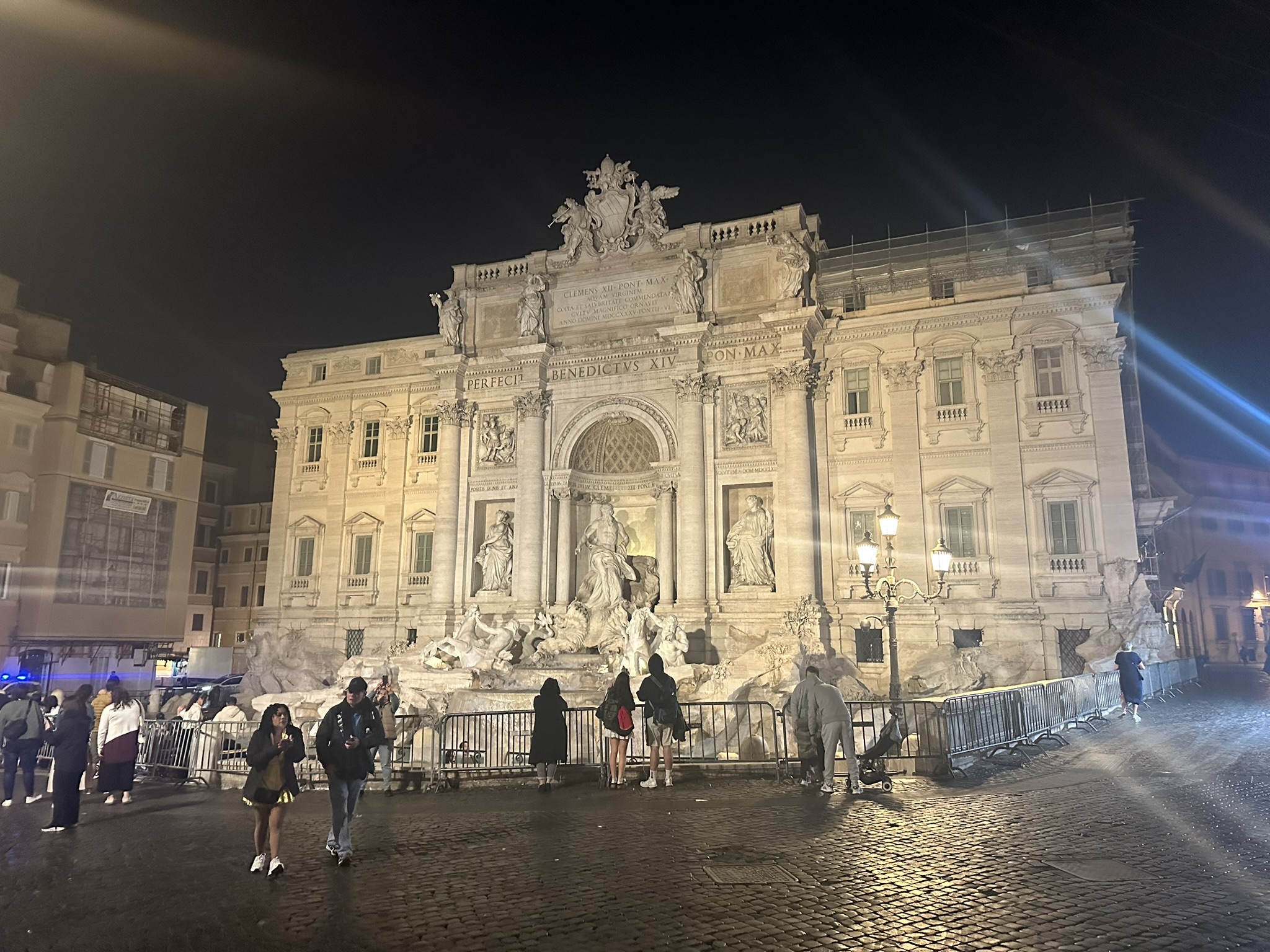
I love seeing Trevi, but the crowds can make it difficult to enjoy for very long. It was packed when we arrived that night, so we took a look and kept moving. I already knew we’d be passing through the area on our run the next morning, and that turned out to be a completely different experience.
Day 3: The best thing we did in Rome started before sunrise
The early-morning run was something I’d been looking forward to since we started planning the trip. Months earlier, I’d seen a video on Instagram of someone running through Rome and thought it looked like an incredible way to experience the city. At the time I hadn’t run much more than a couple of miles without stopping, so I started working on it. I eventually got up to nine miles in training, mostly because I didn’t want the distance to stop me from doing the route once we got there.
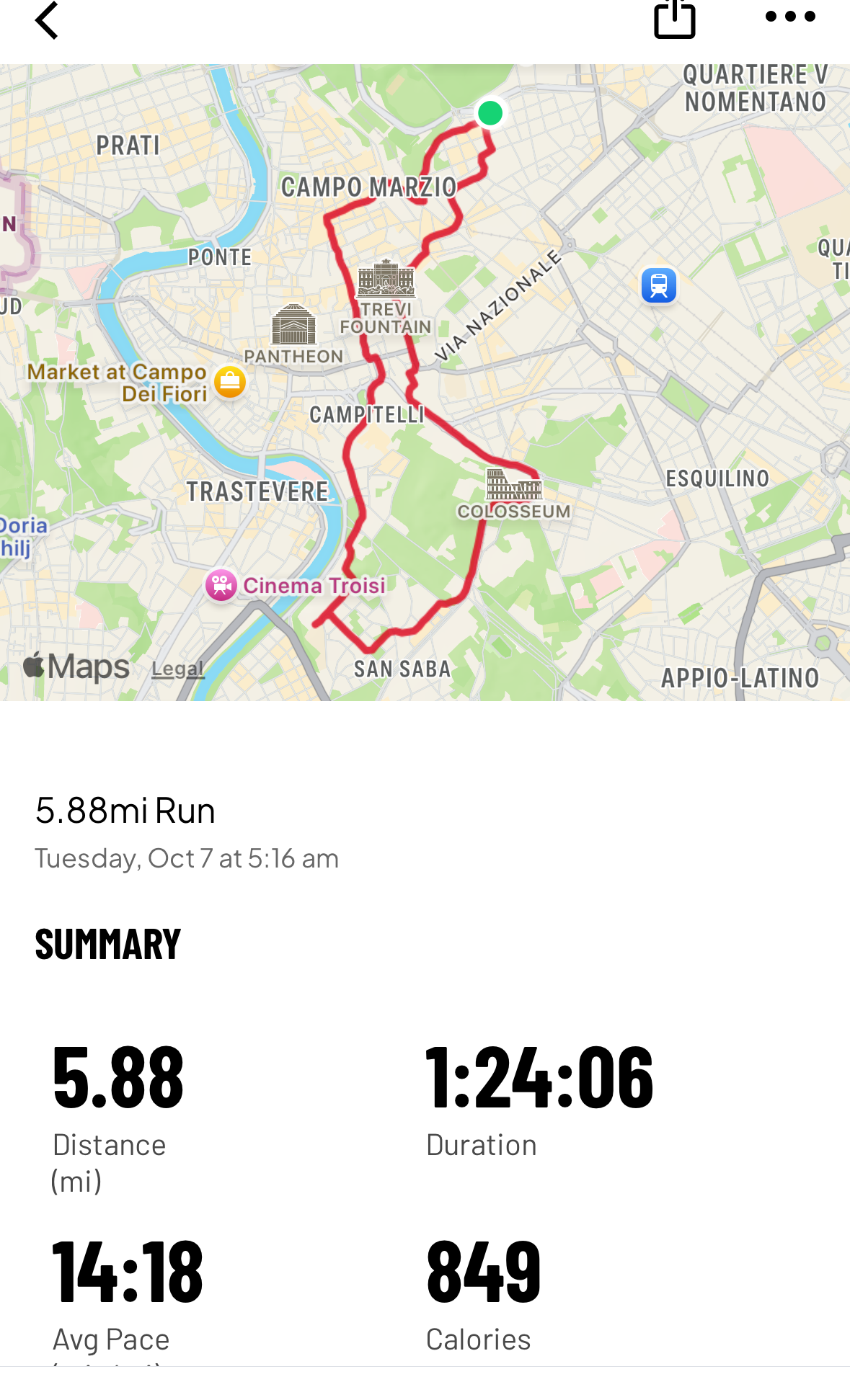
The run itself ended up being about 5.9 miles. Our activity record shows 5.88 miles and a duration of 1:24:06, including plenty of stops for photos. We weren’t trying to set any records. I just wanted to see Rome when it was quiet, and it ended up being one of the best things we did on the whole trip.
Rome at 5 AM barely feels like the same city
We left the hotel while it was still dark. The same streets that had been full of traffic and people the night before were nearly empty, and we were able to run through parts of Rome that would have been difficult to enjoy the same way in the middle of the day.
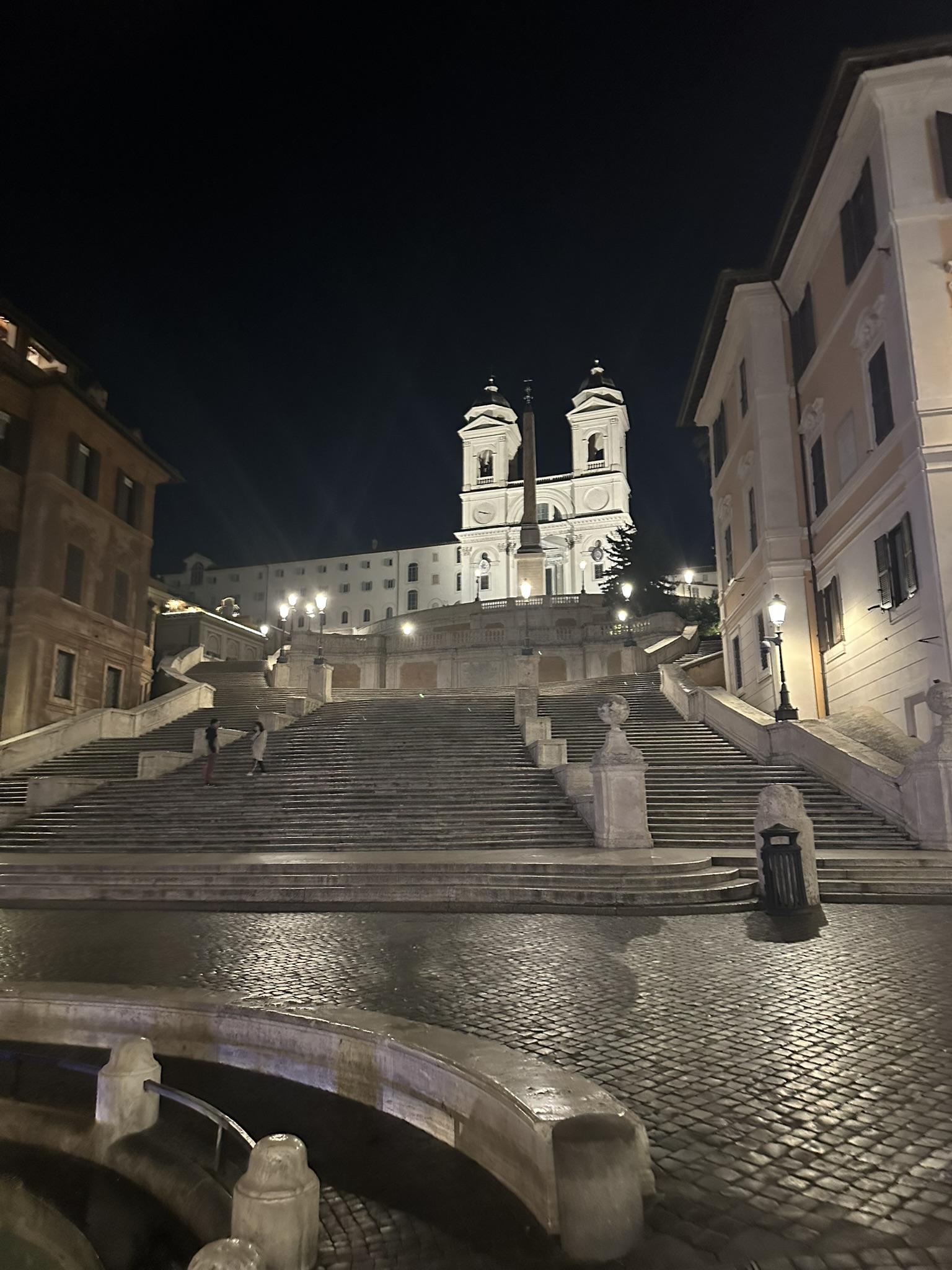
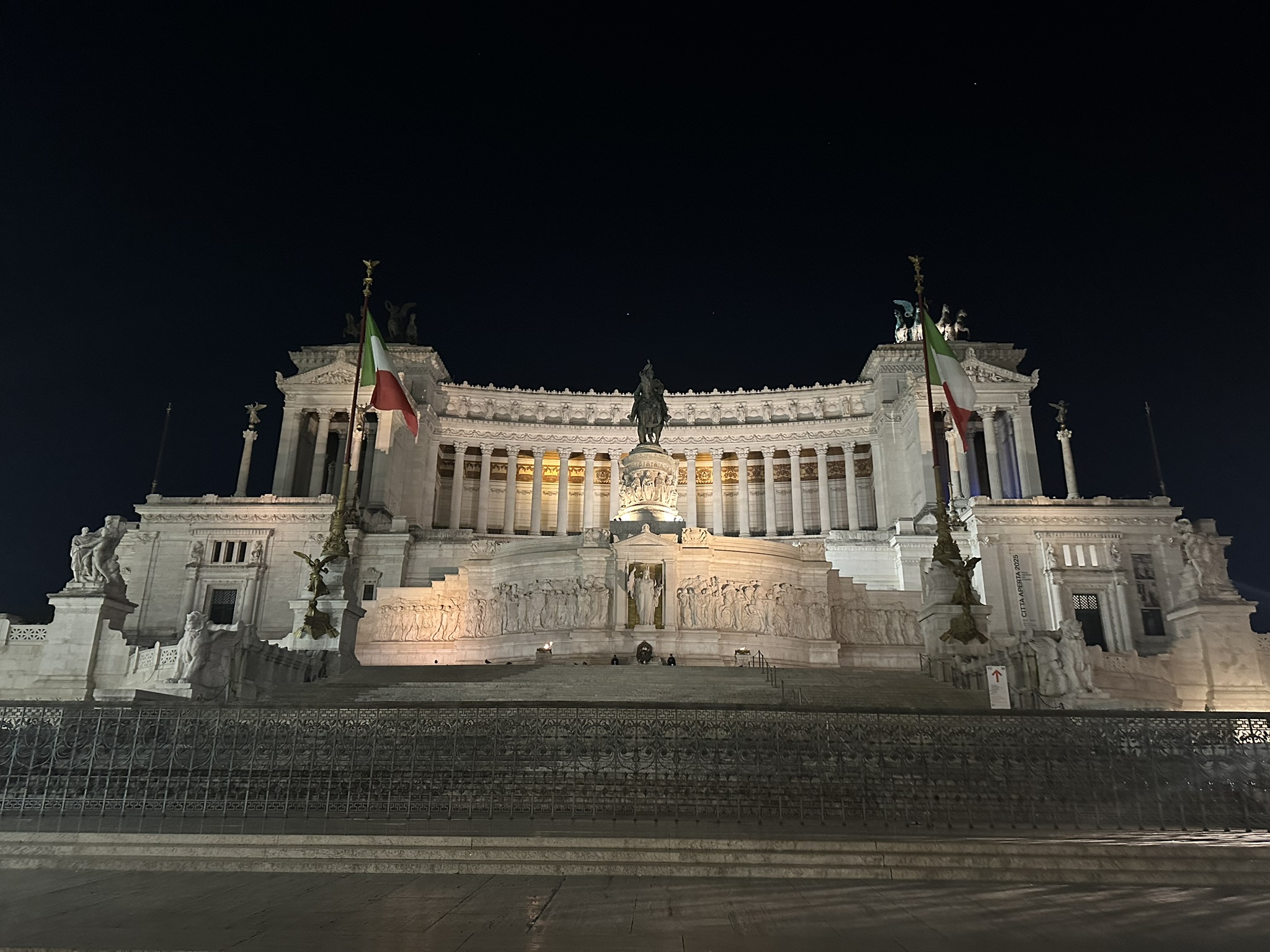
We passed the Sallustian Obelisk above the Spanish Steps, where there were hardly any people around. We ran through Piazza Navona, which felt completely different without the outdoor restaurants and crowds. The Vittoriano was illuminated, and we passed the Temple of Hercules Victor and the Temple of Portunus near the river before climbing toward Aventine Hill.
The Orange Garden and Aventine Keyhole
The Orange Garden on Aventine Hill has one of my favorite views over Rome, particularly toward St. Peter’s Basilica. If you don’t want to run there before dawn, I’d happily recommend going around sunset instead. From there we went to see the Aventine Keyhole, something a guide had told us about on an earlier trip.
I’d heard there could be a long line, but we had the place to ourselves that early. Looking through the tiny keyhole in the gate of the Knights of Malta’s property, you see St. Peter’s Basilica perfectly framed at the end of a tunnel of greenery. The property has a special diplomatic status, which adds another interesting detail to a view that would be worth stopping for anyway.
Back past the Colosseum and Trevi Fountain
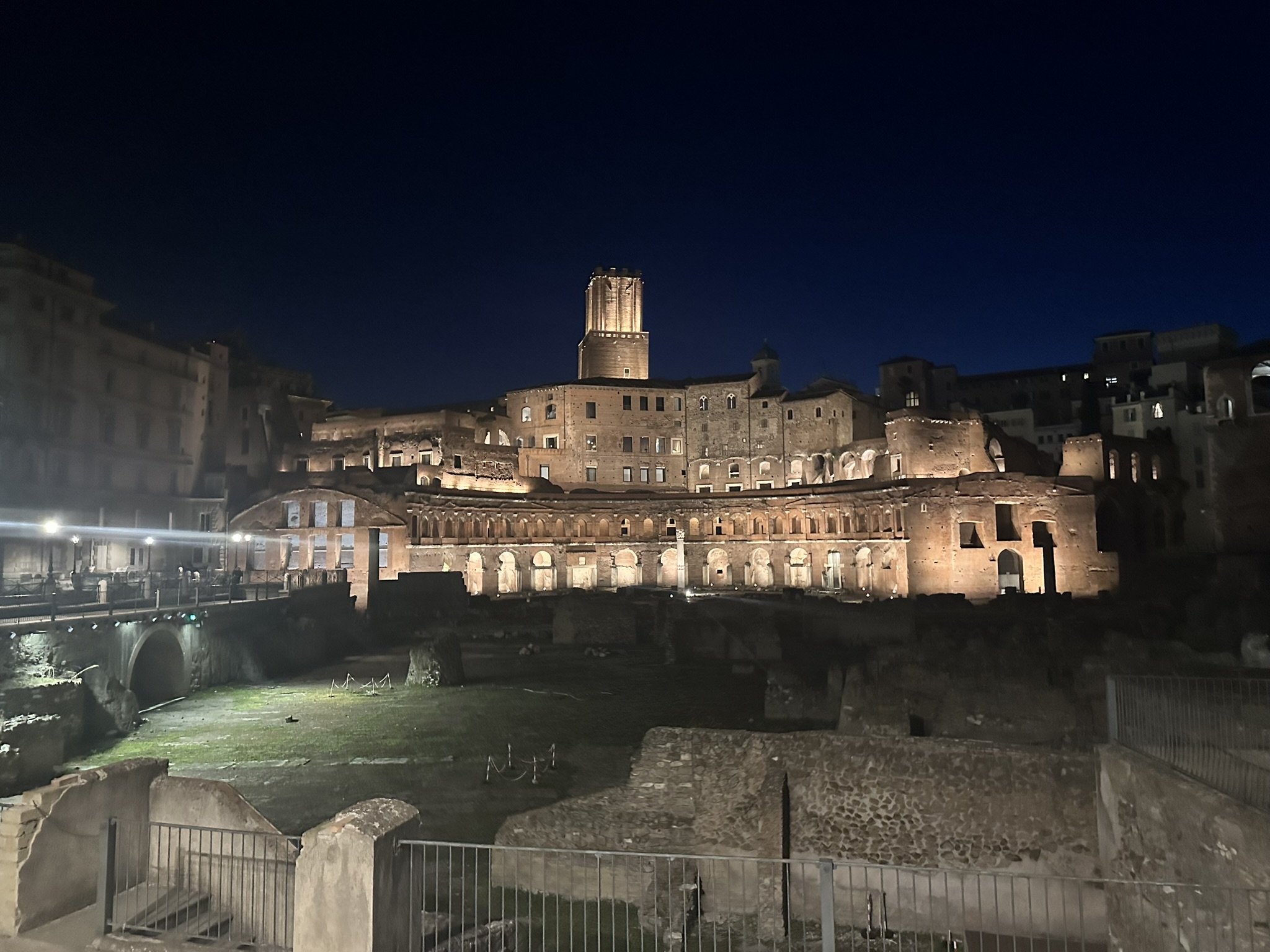
We looped back toward the Colosseum, which looked incredible illuminated against the dark sky. We also passed Trajan’s Markets and other ancient buildings we’d walked near several times during the day without paying much attention to them. Rome has so much history packed into a relatively small area that it’s easy to walk right past something remarkable because you’re looking at something else.
We finished by returning to Trevi Fountain. The night before it had been packed with people, but this time there might have been 10 or 20 people around. Being able to stand there and enjoy it without fighting through a crowd made getting up so early worth it.
That run is a big part of why I’ve gotten into running through cities when we travel. We later did something similar in Paris and loved it there, too. You don’t have to run to get the same benefit, though. Walking through a city before the crowds arrive can be just as good.
The Appian Way was the side of Rome we had missed
By 9:30 AM we were back on a golf cart, this time heading away from the usual central-Rome sights. We had seen a lot of the Colosseum, Vatican, and historic center on our first trip, but we hadn’t explored the Appian Way or the catacombs. That’s what made this tour appealing to me. We were getting to see a completely different side of a city we’d already visited.
This is the Appian Way and Catacombs golf-cart tour we booked.
Walking on the ancient Appian Way
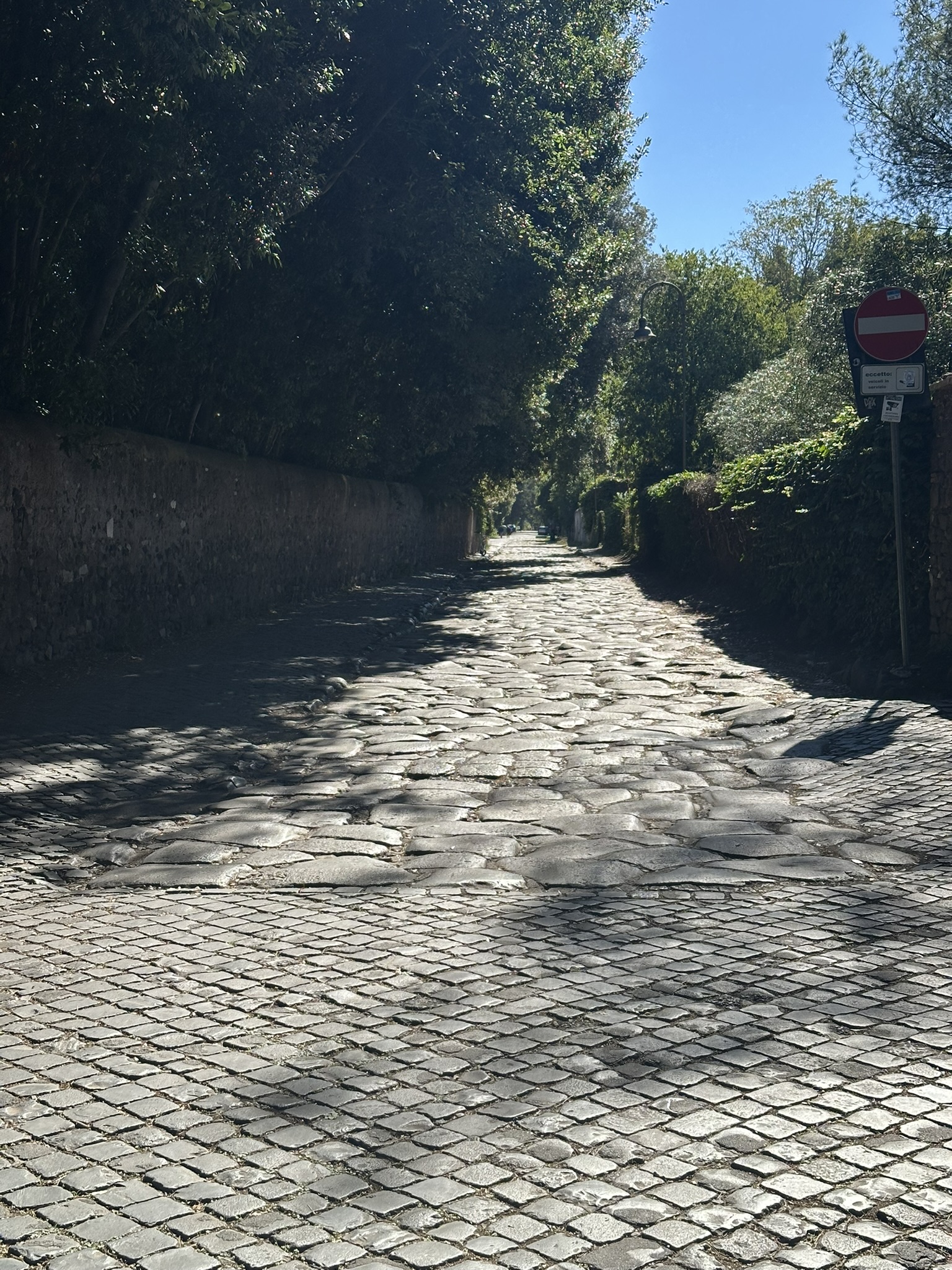
The Via Appia Antica was first built in 312 BC and became one of the important roads leading south from Rome. In some places the original dark stone paving is still there. It was strange to think about how many centuries of people had traveled along the same route and then realize we were walking over surviving sections of the actual road.
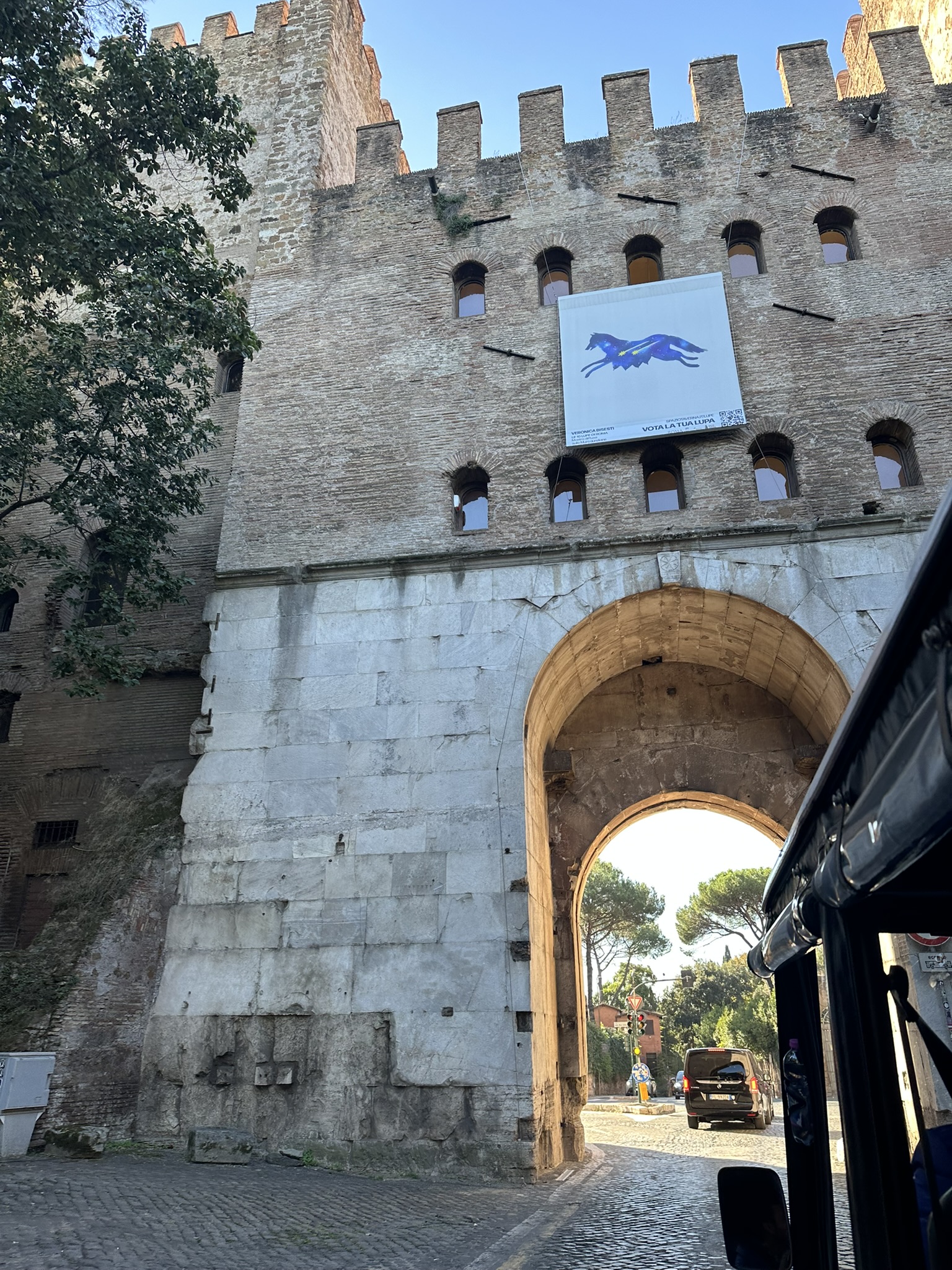
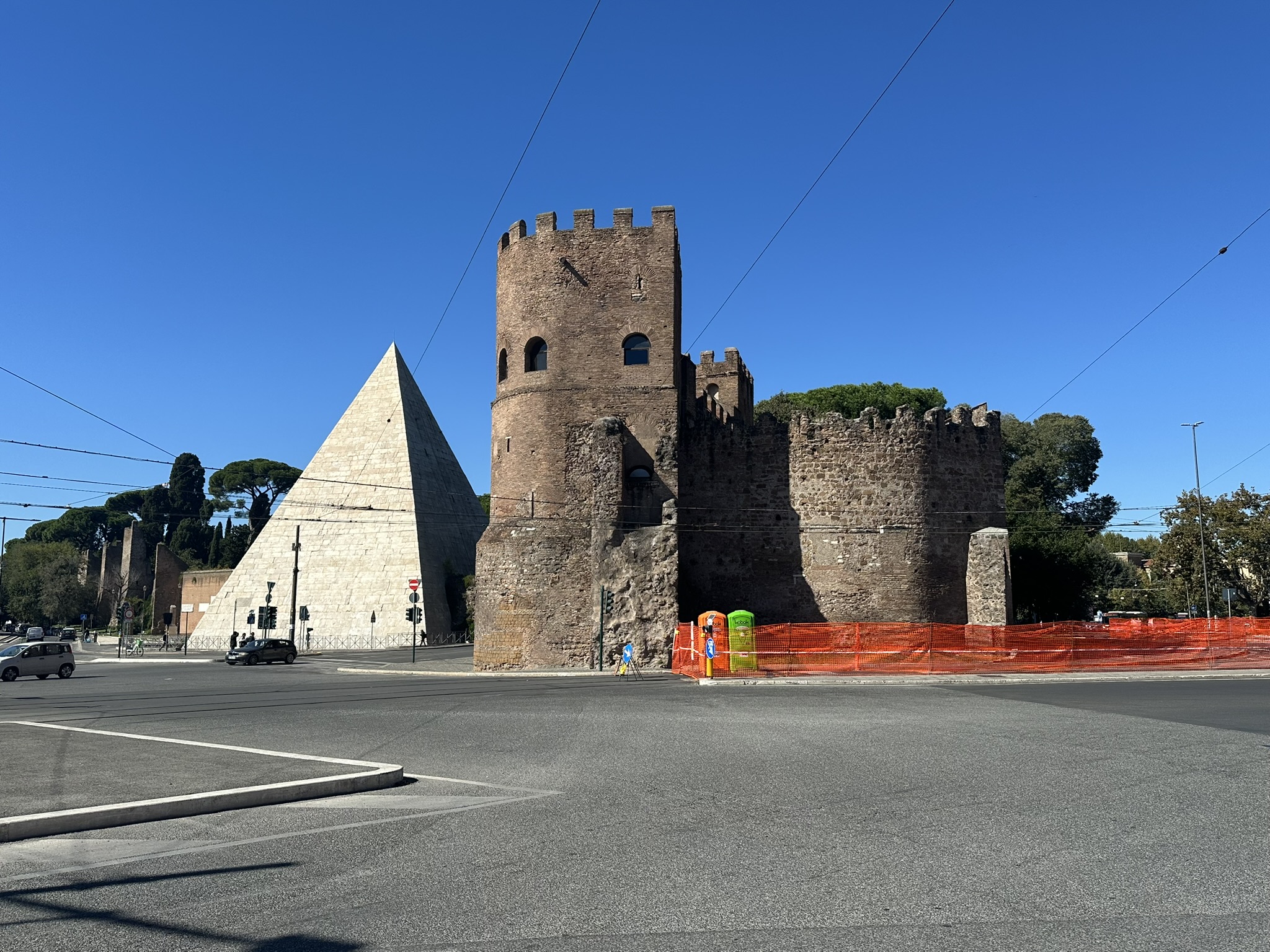
We also passed through Porta San Sebastiano, the huge gate where the Appian Way meets the Aurelian Walls. It brought us back to the same wall system we’d been looking at across the street from our hotel. On a map, these places can look like separate attractions, but seeing them in person made it much easier to understand how they fit together.
The catacombs of San Sebastiano
Our next stop was the Catacombs of San Sebastiano. If you’ve visited the catacombs in Paris, don’t expect the same kind of display here. These are ancient burial galleries with niches in the walls, Roman mausoleums, and early Christian history, but they aren’t lined with neatly arranged bones and skulls.
One detail our guide explained is that this area was known as ad catacumbas, and that local name eventually became the general word “catacomb.” I liked learning that while actually walking through the underground passages, rather than reading it on an information board later.
San Sebastiano Basilica and an unexpected fossil
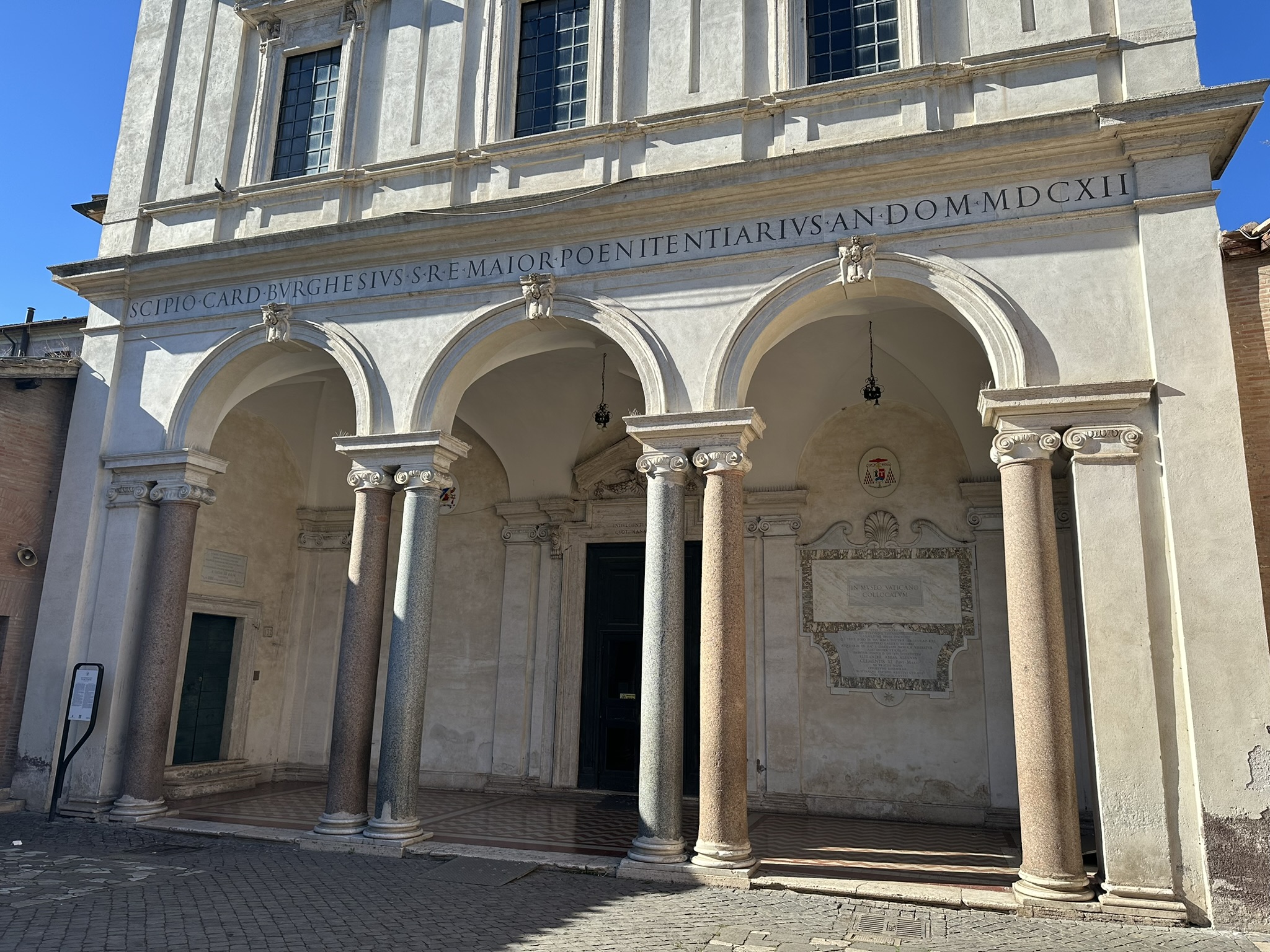
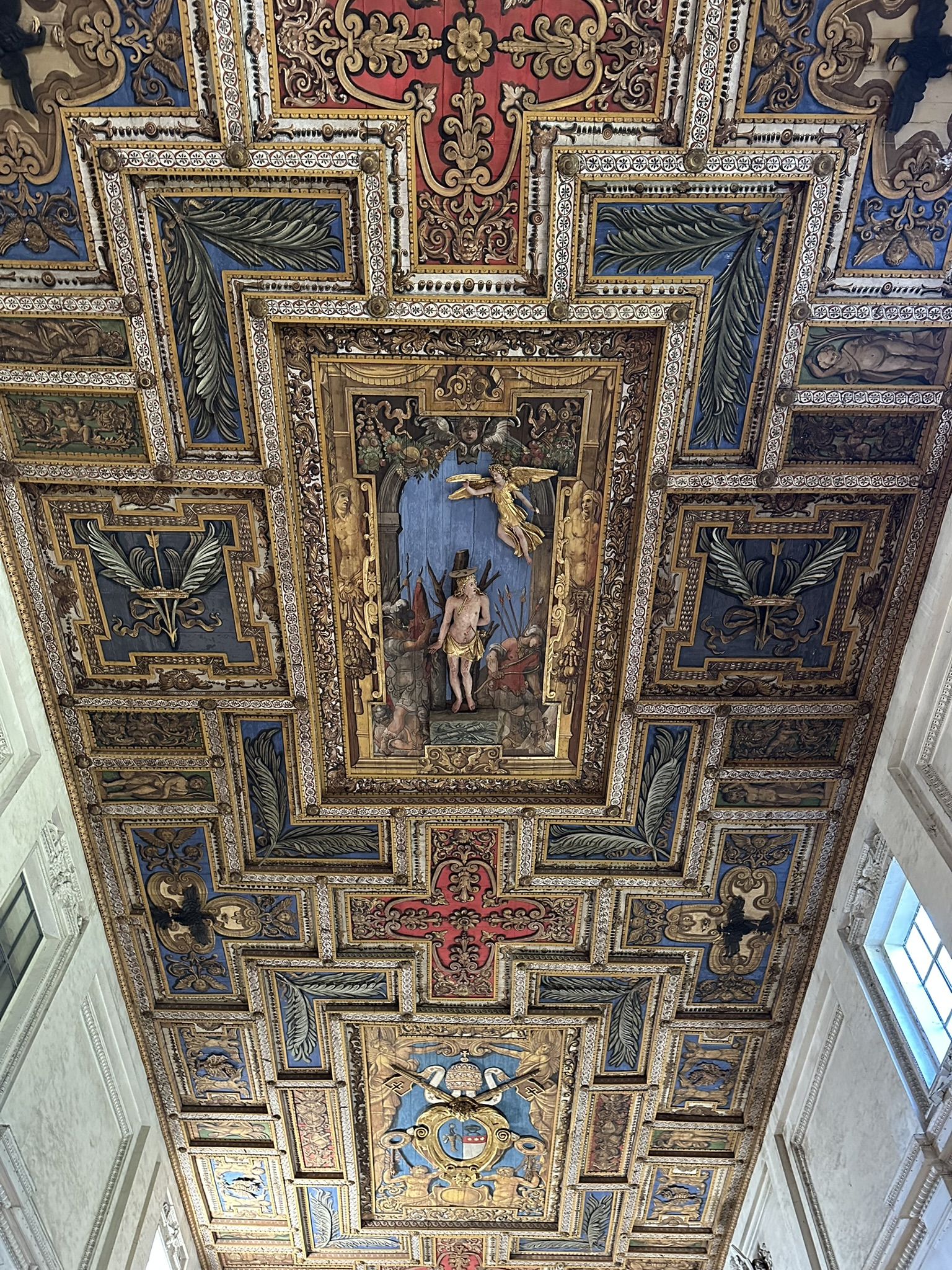
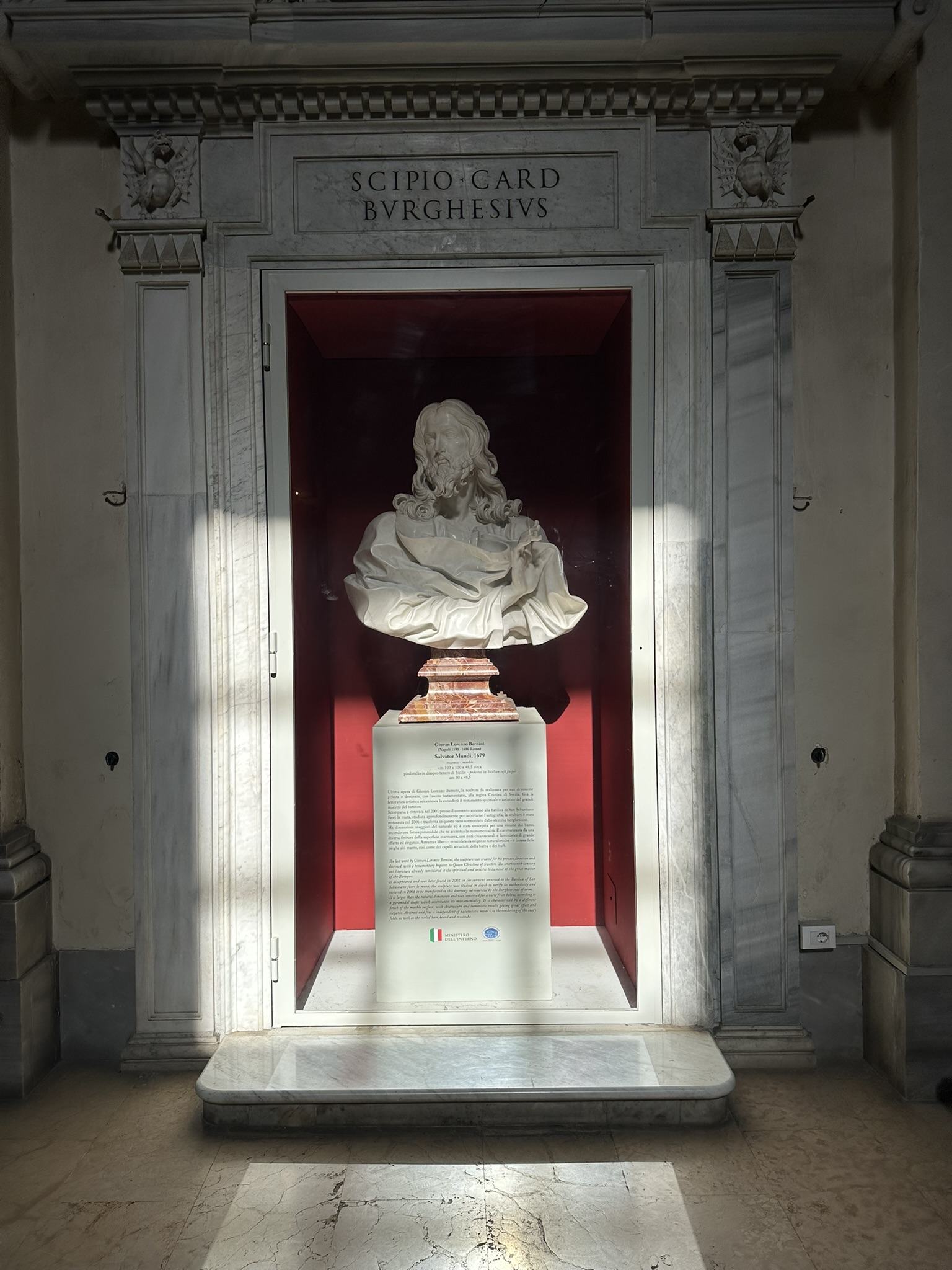
After the underground portion, the tour brought us into the Basilica of San Sebastiano fuori le Mura. We went from dark burial passages to a church with a beautiful painted and gilded ceiling, relics associated with St. Sebastian and the Quo Vadis tradition, and Bernini’s Salvator Mundi. It was more elaborate than I’d expected for a stop we’d originally thought of mainly as a catacomb tour.
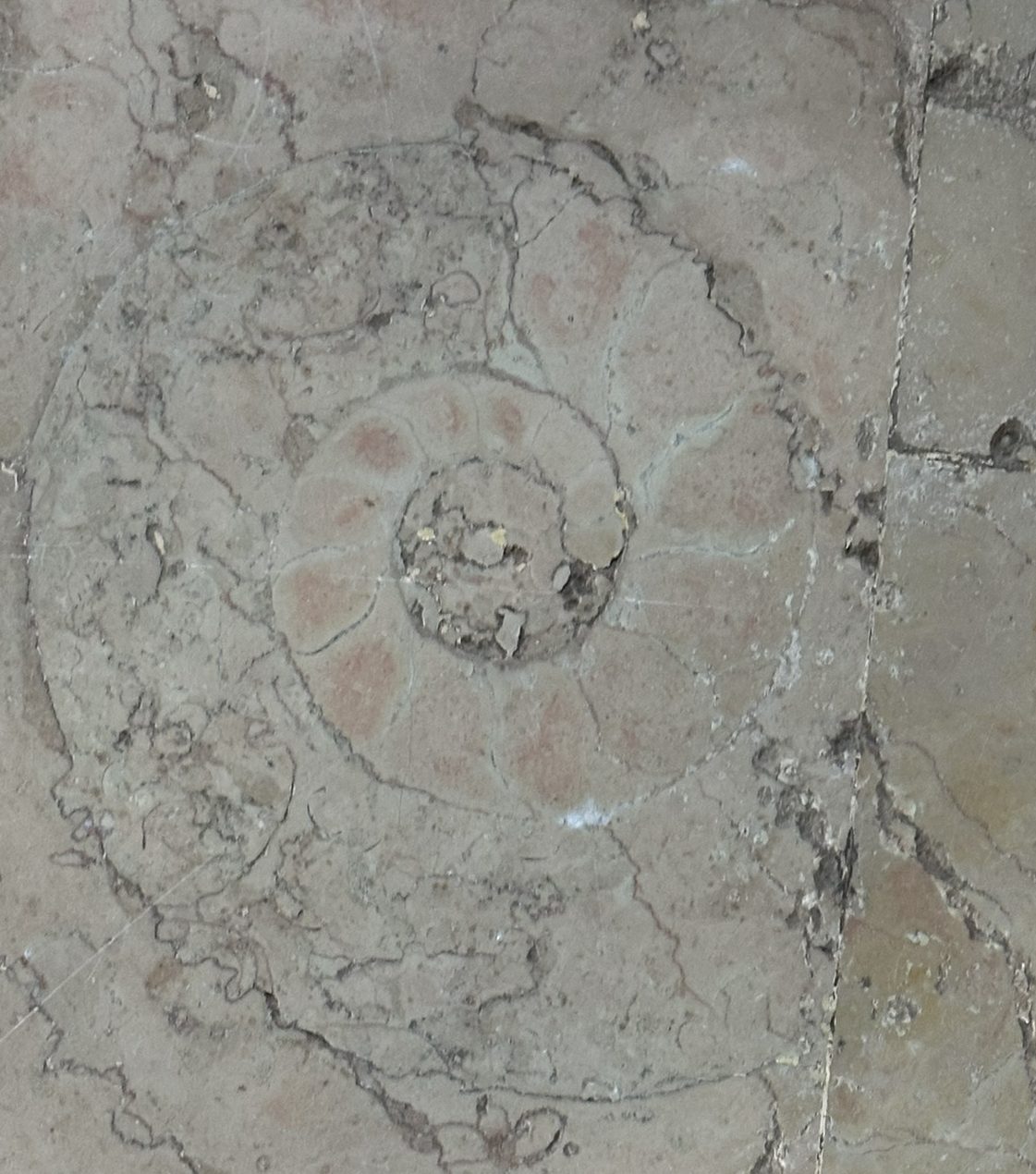
Then our guide pointed out something in the stone floor: an ammonite fossil. We’d been paying attention to the paintings, sculptures, and religious history, and probably would have walked over it without noticing. It’s a small detail compared with the rest of the site, but finding a fossil that’s far older than the church or even the ancient city was one of my favorite surprises of the morning.
The Villa of Maxentius
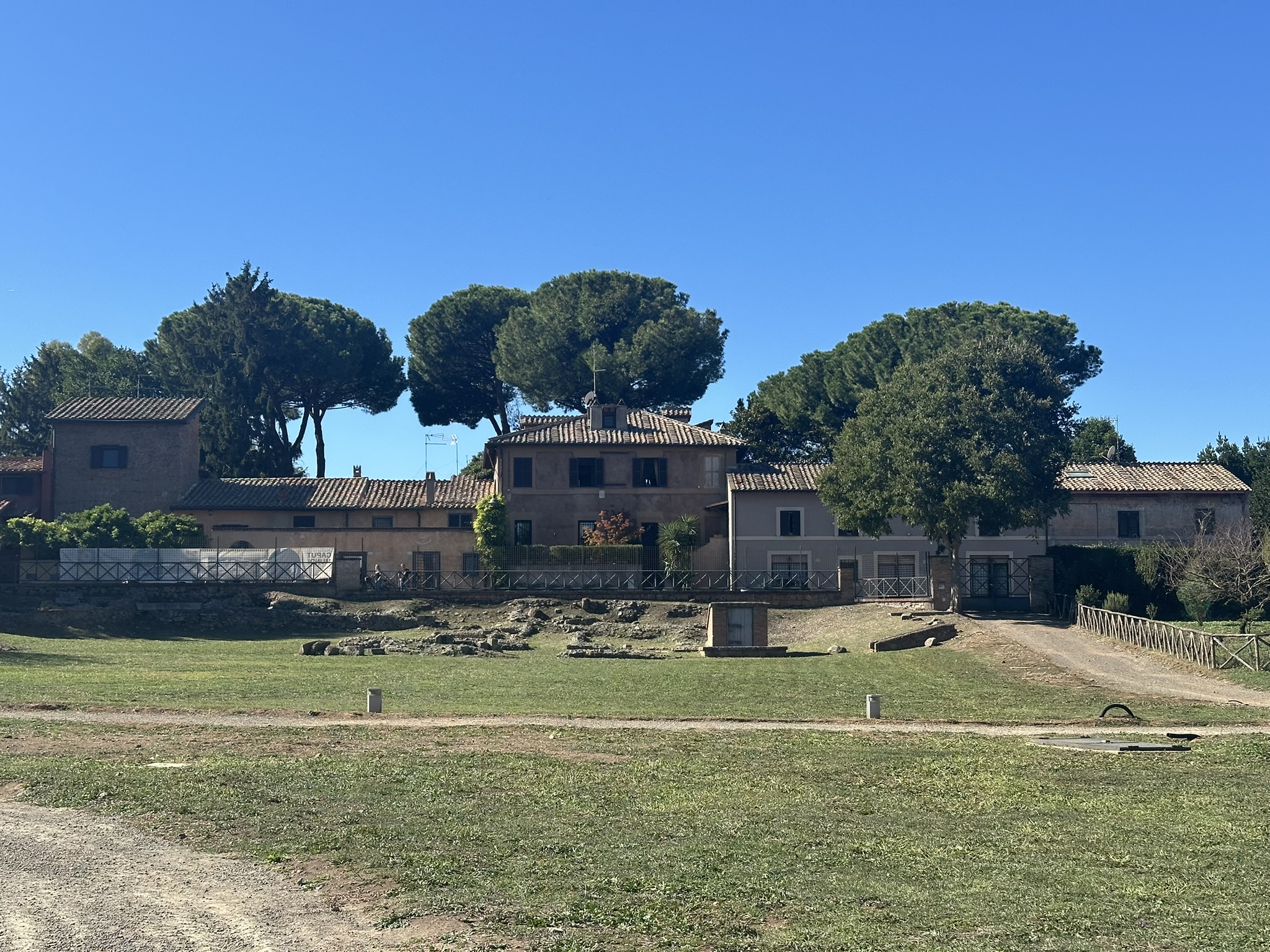
We also stopped to walk around the Villa of Maxentius. The name makes it sound like a single old house, but the complex includes an imperial palace, the Mausoleum of Romulus, and a chariot-racing circus. The circus was especially interesting because of a connection to the previous night: the obelisk above Bernini’s Fountain of the Four Rivers in Piazza Navona once stood here.
We’d eaten dinner beside that fountain the night before without knowing much about where the obelisk had come from. The next morning we were standing at the ancient site where it used to be. Details like that are a big part of why I’m happy to take guided tours, even when we’ve already done a lot of sightseeing in a city.
And a pyramid in Rome
We also passed the Pyramid of Cestius, an Egyptian-style pyramid built as a tomb for Gaius Cestius. It was later incorporated into the Aurelian Walls, which helped preserve it. I knew Rome had all kinds of ancient monuments, but a pyramid next to the defensive walls still caught me off guard.
One last Roman lunch before the train
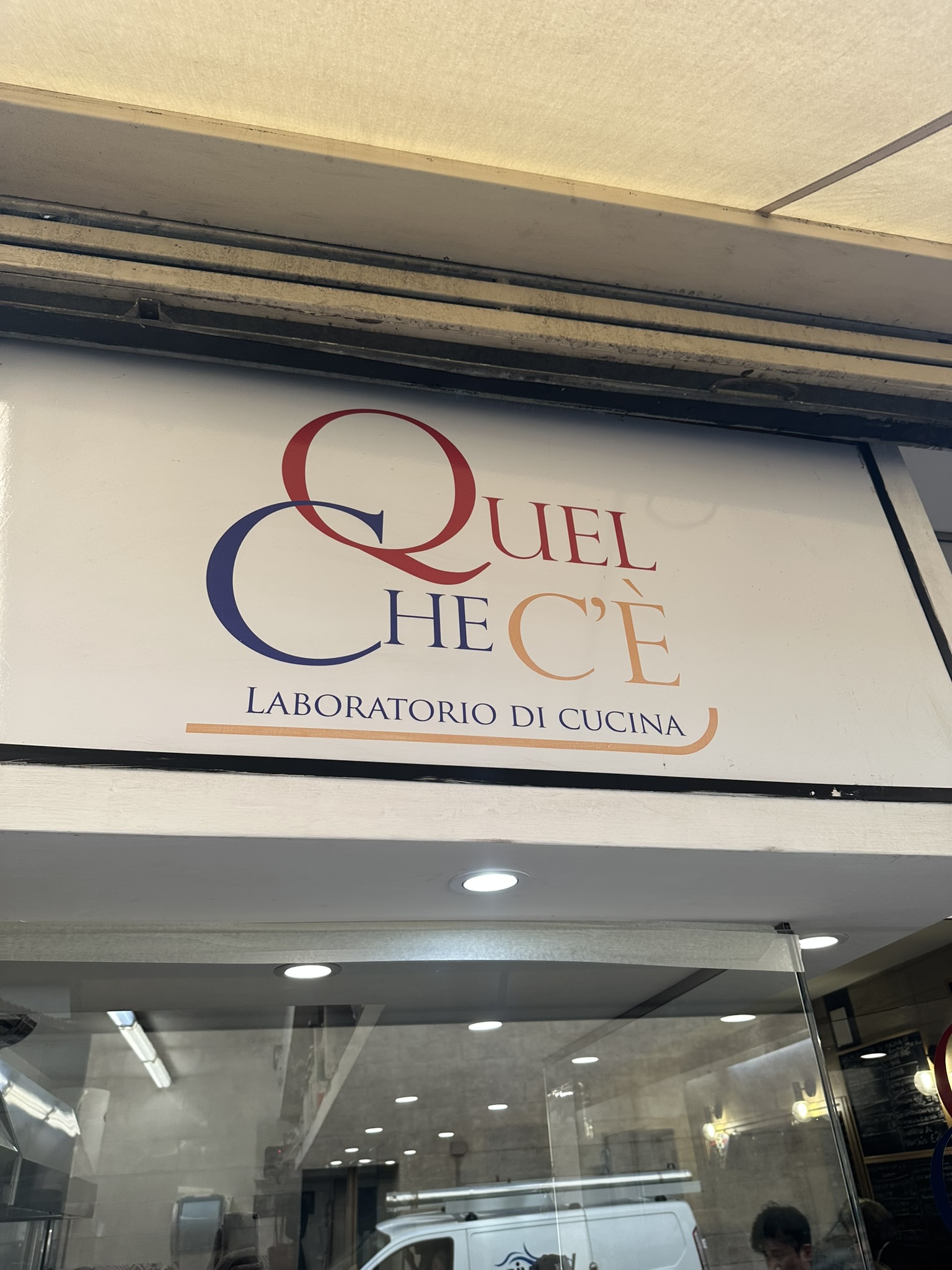
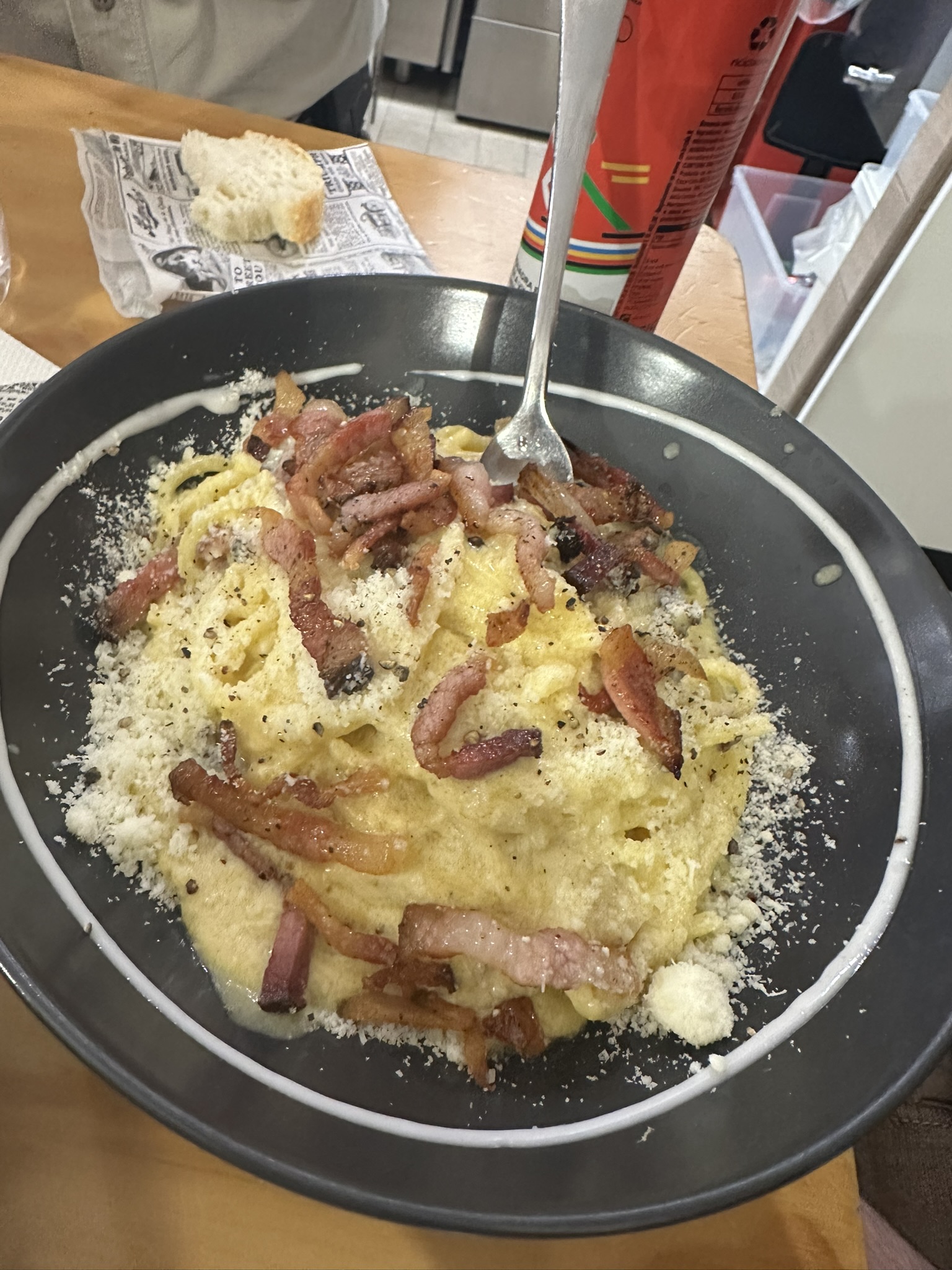
At the end of the tour we asked our guide where he’d go for a small, local lunch, and he sent us to Quel Che C’è. It was a little place with only about eight or ten tables, a menu full of Roman classics, and specials written on a blackboard. We waited outside, got seated, and ordered carbonara and pumpkin orecchiette with sausage.
The orecchiette was different from anything else we’d eaten on the trip, and the portion was enormous. I probably wouldn’t have ordered it on my own, which is one reason I was glad we’d asked for a recommendation instead of just picking somewhere at random.
We finished with gelato from Il Capriccio Di Carla, headed to Termini, and took the 3:35 PM Frecciarossa to Venice. We’d seen a lot in 54 hours, and the next part of the trip was already waiting for us.
Affiliate disclosure: some tour links on this page are affiliate links. We booked and took the experiences described here ourselves. If you book through one of those links, Atlas Road Travel may earn a commission.
What I’d do again
Quite a lot of it. I’d book the airport transfer and a first-day orientation tour again, and I’d happily stay near Villa Borghese. The Colosseum Underground, Roman Forum, St. Peter’s Basilica, Pantheon, and Piazza Navona all deserve repeat visits for us. I also wouldn’t hesitate to book another Appian Way tour, especially one that gives us more time to explore.
The early-morning run might be the part I’d recommend most enthusiastically to someone who likes running while traveling. And if that isn’t your thing, I’d still suggest getting out early at least once. Seeing places like Trevi Fountain and the Spanish Steps without the usual crowds is worth the alarm.
What I’d change next time
The biggest change would be the timing of St. Peter’s and the Colosseum. We missed the dome because our Basilica tour ran long and we had a reservation we couldn’t move. Next time I’d leave more space between two major timed activities, especially when there’s one part I really don’t want to miss.
I’d also allow more time for the Appian Way. The tour was a great introduction, but it made me realize how much more there is out there. Circus Maximus and Santa Maria in Aracoeli are still on my list, too, so it’s not like we’ve run out of reasons to go back.
So, is three days in Rome enough?
For a return visit like ours, parts of three days worked very well. We were tired by the end, but we had time for good meals, the sights we wanted to revisit, a run before sunrise, and places we’d never seen before. I wouldn’t describe it as a relaxing schedule, but we enjoyed it.
If this were your first trip to Rome and you wanted to spend a full day at the Vatican Museums, linger over lunch, or visit several museums, I’d add more time. We knew which things mattered to us on this trip, and that made it easier to plan. I still don’t think you’re ever going to feel like you’ve finished Rome, no matter how many days you have.
Next stop: Venice
After lunch, gelato, and a quick trip back to the station, we boarded the train for Venice. Rome was only the start of our larger Europe trip with my parents, and the next day brought an entirely different set of travel lessons. I’ve written about that stop in our 24 hours in Venice before the cruise.
Keep exploring Rome
Rome | Oct 5–7, 2025The dated Visit record with our hotel, itinerary, tours, and train to Venice.
2025 Europe + Mediterranean CruiseSee where Rome fit into our full trip through Europe.
Planning a Rome trip?
I can help you put together an itinerary around the places you actually want to see, whether that’s a busy few days like ours or a slower visit with more time in each neighborhood.
Hero photograph: David Libeert / Unsplash.