Seoul: 4-Day Sample Itinerary
This is a planning example, not a record of a trip we personally took. We can tailor the timing, hotel choices, and activities to your dates and interests.
At a glance
- Destination
- South Korea
- Duration
- 4 days
- Travel style
- Palaces, art, food, neighborhoods
Four days in Seoul is long enough to understand why the city appeals to so many different kinds of travelers, but short enough that neighborhood choices matter. I’d balance one palace-and-historic-streets day with contemporary districts, markets and city views. The best plan is not to dart from every viral café to every famous tower on the same afternoon.
This is a three-night introduction for first-time visitors who like food, street life, architecture and a little history. It uses one hotel, ideally with good subway access, and keeps the final day flexible for a flight. Seoul rewards spontaneity, but palace opening days and the arrival airport should be settled before fixing restaurant reservations.
The route and number of nights
Stay three nights in central Seoul. Day 1 is arrival and a nearby walk, Day 2 combines Gyeongbokgung Palace with the northern historic neighborhoods, Day 3 gives a contrasting modern neighborhood and a market or nightlife stop, and Day 4 is a flexible final outing before departure.
Gyeongbokgung normally closes on Tuesdays, with holiday exceptions, so do not attach the days above to fixed weekdays. Rearrange the palace and modern-city day around the real calendar. A hotel around Gwanghwamun, City Hall or Myeongdong makes the historic sights accessible; Hongdae creates a livelier and more youthful base but shifts daily transport.
Day-by-day itinerary
Day 1: Arrival and a gentle central-city walk
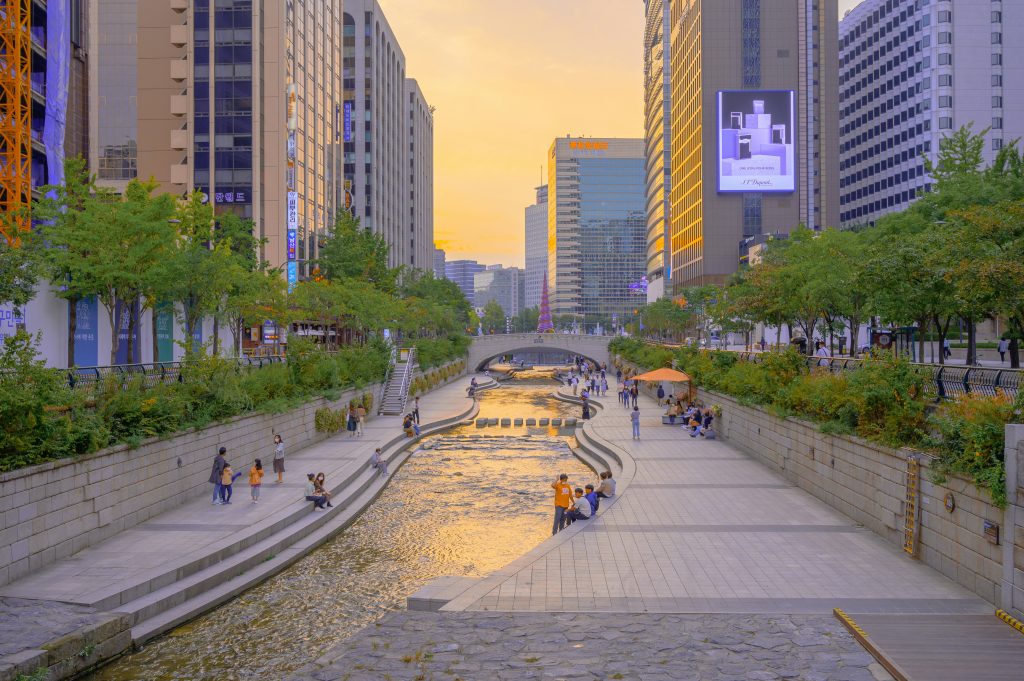
Land, travel into Seoul and settle into the hotel before choosing a simple evening route. Around Myeongdong, the busy streets make a lively first introduction, and Cheonggyecheon is an option for a calmer waterside walk if you have energy. Eat near the hotel rather than taking a long subway journey across the city after a flight. Seoul’s scale becomes easier to manage after one restful night and a chance to learn the local transit system.
Planning note: Check whether you arrive at Incheon or Gimpo. They are different airports with different access options, and airport transfers should be planned for the precise hotel rather than described as one generic train ride.
Day 2: Gyeongbokgung, Bukchon and Insadong
Start with Gyeongbokgung Palace when it is open and give its grounds enough time to be more than a photo stop. Continue toward Bukchon Hanok Village or adjacent streets with respect for residents, then explore Insadong for crafts, tea and a slower lunch. The area’s historic architecture is worth enjoying at a thoughtful pace; it doesn’t need three more distant attractions to fill the day.
Planning note: The official Seoul visitor guide lists Tuesday as the usual palace closure. Bukchon includes residential streets and visitor restrictions may apply, so follow local signs and current rules.
Day 3: Contemporary neighborhoods, design and food
Choose one modern district that fits your interests. Seongsu and the Seoul Forest area offer a café-and-design-oriented day; Hongdae is more appealing for a music, shopping and nightlife atmosphere. I would not claim you can properly explore both plus Gangnam and a faraway tower in one afternoon. Later visit Gwangjang Market or find a restaurant near your chosen district, using the subway to make one sensible move rather than several.
Planning note: Markets can be crowded, and not all stalls keep the same schedule. If the group has mobility or dietary constraints, leave time for a quieter sit-down meal instead of relying on street-food grazing.
Day 4: Namsan views, last shopping or departure
If you have a late departure, consider Namsan or a neighborhood you particularly liked, followed by a practical lunch and hotel luggage pickup. For an early flight, keep Day 4 to breakfast and the airport transfer. The final morning can also be a chance to return to a favorite shop instead of introducing a distant new district. A calm departure is worth more than one rushed selfie.
Planning note: Allow time for airport travel, security and any tax-refund procedures that apply. A four-day city trip should not end with a race across Seoul from an attraction to the departure gate.
Hotels to consider
The hotel should put you near the metro and support the kind of evenings you prefer. These three options span different locations and travel styles. I would compare the room, walking access and airport transfer together, not judge them on brand alone.
- Four Seasons Hotel Seoul: A polished Gwanghwamun base for travelers placing the historic center, palace district and full-service hotel facilities high on the list. Convenient if Day 2 is the main sightseeing priority.
- LOTTE HOTEL SEOUL: A central hotel around the city shopping and business districts, useful for visitors who want a familiar service style and access to Myeongdong and public transport. Compare room wings and types.
- RYSE, Autograph Collection: A design-minded Hongdae hotel option suited to travelers who want lively restaurants, shops and a younger neighborhood scene near the hotel. It’s less convenient than Gwanghwamun for an early palace morning, so factor that tradeoff in.
A couple planning a history-heavy first trip may be happiest around Gwanghwamun. Someone who expects to spend every evening in Hongdae may prefer sleeping there. Seoul’s transit makes several bases possible, but the right neighborhood can save repeated journeys at the beginning and end of each day.
Food stops that fit the trip
Seoul is an excellent place to plan meals by neighborhood. Rather than reserving four famous restaurants in completely different districts, I’d choose one deliberate Korean meal and use markets and local cafés around the daily route. Restaurant turnover can be quick, so final venue details deserve a fresh check.
- Gwangjang Market: A lively, well-known market experience for Korean street food and quick meals. It is not a hidden neighborhood secret, but it can be enjoyable when you’re comfortable with crowds and flexible about where to sit.
- A traditional lunch around Insadong: After Gyeongbokgung and the nearby streets, look for a restaurant serving bibimbap or another Korean classic. I’d choose it according to the actual route and group preferences rather than send everyone far away for a specific internet-famous dish.
- Korean barbecue near Hongdae: An appealing evening option for small groups who want a more social meal after exploring the district. Confirm whether a restaurant can accommodate your party and any dietary preferences before committing to a particular booking.
- Tea and sweets in a quieter café: Use the Bukchon or Insadong portion for a tea stop, or select a contemporary café around Seongsu on Day 3. One comfortable pause adds more to the trip than visiting five nearly identical cafés for photographs.
Transport, tickets and practical details
A good Seoul short break is about transit and grouping. The city is extensive, but a few simple decisions make the experience much easier to navigate.
- Palace schedule: Consult the official Seoul travel guide for operating days, including its usual Tuesday closure and holiday rules.
- Subway and payment: Plan how to obtain and top up a transit card, and use live directions for the actual hotel and attractions. Don’t assume every taxi driver or payment terminal accepts the same app.
- Airports: Incheon and Gimpo have distinct transfer times and routes. Check late arrivals and early departures against train and bus operating schedules.
- Neighborhood etiquette: Bukchon is a living residential area, not a set built for tourists. Respect quiet rules, restricted routes, photography requests and local signs.
- Connectivity and language: Consider a roaming plan or eSIM and reliable Korean navigation tools. Keep hotel details in Korean on your phone for smoother taxis and transfers.
How I’d customize this itinerary
- Families: Shorten palace walking time, choose a manageable museum or park experience and allow meal flexibility around younger travelers.
- Food-first travelers: Select one expert-led food tour or special restaurant and use that neighborhood as the day’s anchor.
- Contemporary culture fans: Make Hongdae or Seongsu the larger focus and reduce the number of historic sites to one meaningful palace visit.
Frequently asked questions
Is four days enough for Seoul?
Yes for a strong introduction, especially with one hotel and neighborhood-based days. It is not enough for every fashionable district, museum and day trip without becoming rushed.
Should I add the DMZ?
Only if it is a clear priority. It consumes substantial time and has access and booking conditions that can change. I’d replace part of the city itinerary rather than pretend it fits between two museum visits.
Do I need a rental car?
No for this city-focused route. Seoul’s transit network is generally a better starting point, with taxis useful for some luggage or late-evening needs.
Plan the trip around your dates
This itinerary gives travelers a useful first look at Seoul without claiming that Atlas Road Travel personally visited every recommended business. We can adjust the hotel neighborhood, airport transfer and activity priorities to your travel dates, then work out which reservations are worth making ahead.
Get the complete itinerary
We will email you a printable PDF and an editable Word document, with planning notes, lodging guidance, and booking priorities. No automated follow-ups or sales sequence. Just reply if you want help planning your trip.
One delivery email for this request. We will not subscribe you to a newsletter without separate permission. Privacy policy
Need help making this a real trip? Atlas Road Travel can help plan it, with no planning fee for eligible bookings.