How to Avoid Tourist Traps: Research Strategies That Actually Work
You’ve just paid €25 for mediocre pasta in a “charming” Roman restaurant steps from the Trevi Fountain. The waiter was pushy, the food was clearly reheated, and every other table is filled with tourists looking equally disappointed. Welcome to a tourist trap.
We’ve all been there. That sinking feeling when you realize you’ve just wasted money and precious travel time on an experience that was designed to separate you from your cash, not give you an authentic taste of a destination.
The problem is that tourist traps are everywhere, and they’re getting better at disguising themselves as authentic experiences. Following TripAdvisor’s top ratings won’t save you. Neither will simply avoiding anywhere with tourists (spoiler: you’re a tourist too).
What you need is a research framework that actually works, one that helps you spot the red flags before you commit. This is the same process we use before recommending anything to clients or booking for ourselves. We’ll walk you through how tourist traps operate, the warning signs to watch for, and the specific strategies we use to find authentic experiences.
Want to skip the research entirely? We verify everything before recommending it. Book a free consultation to get started.
Why Tourist Traps Exist and How They Game the System
Understanding why tourist traps exist makes you infinitely better at spotting them. It’s not personal. It’s just business.
The Business Model of Tourist Traps
Tourist traps target tourists for very specific economic reasons. Tourists are one-time customers, which means there’s no need to build a relationship or reputation. You won’t be back next week to complain. Tourists also don’t know local prices or standards, making it easy to overcharge. And tourists in high-traffic areas are often tired, hungry, and making decisions under pressure, which means they’re more likely to settle for whatever’s convenient.
Here’s the reality: A restaurant near the Eiffel Tower pays €15,000 per month in rent. To cover that overhead, they need to turn tables six or more times per night. Quality doesn’t matter when you’re playing a volume game. Location and tourist traffic matter.
How They Manipulate Online Rankings
Tourist traps have become sophisticated at gaming the review systems you trust.
On TripAdvisor and Google, manipulation tactics include paying for fake reviews (going rate: $5-15 per review), practicing review gating (only asking happy customers to leave reviews, which violates platform policies but happens constantly), and incentivizing reviews with offers like “leave a 5-star review for free dessert.” Some businesses even pay for negative reviews on competitor listings, and they exploit recency bias by creating bursts of recent positive reviews to bump their ranking.
The content manipulation extends beyond reviews. Businesses stuff their websites with keywords like “best authentic Italian near Colosseum,” buy sponsored listings on travel blogs, and pay influencers for mentions without proper disclosure. Those “As seen on…” claims? Often paid placements. “Award-winning” labels? Frequently pay-to-play nominations. Photos of the owner with celebrities? The celebrity was paid to visit.
Psychological Tricks They Use
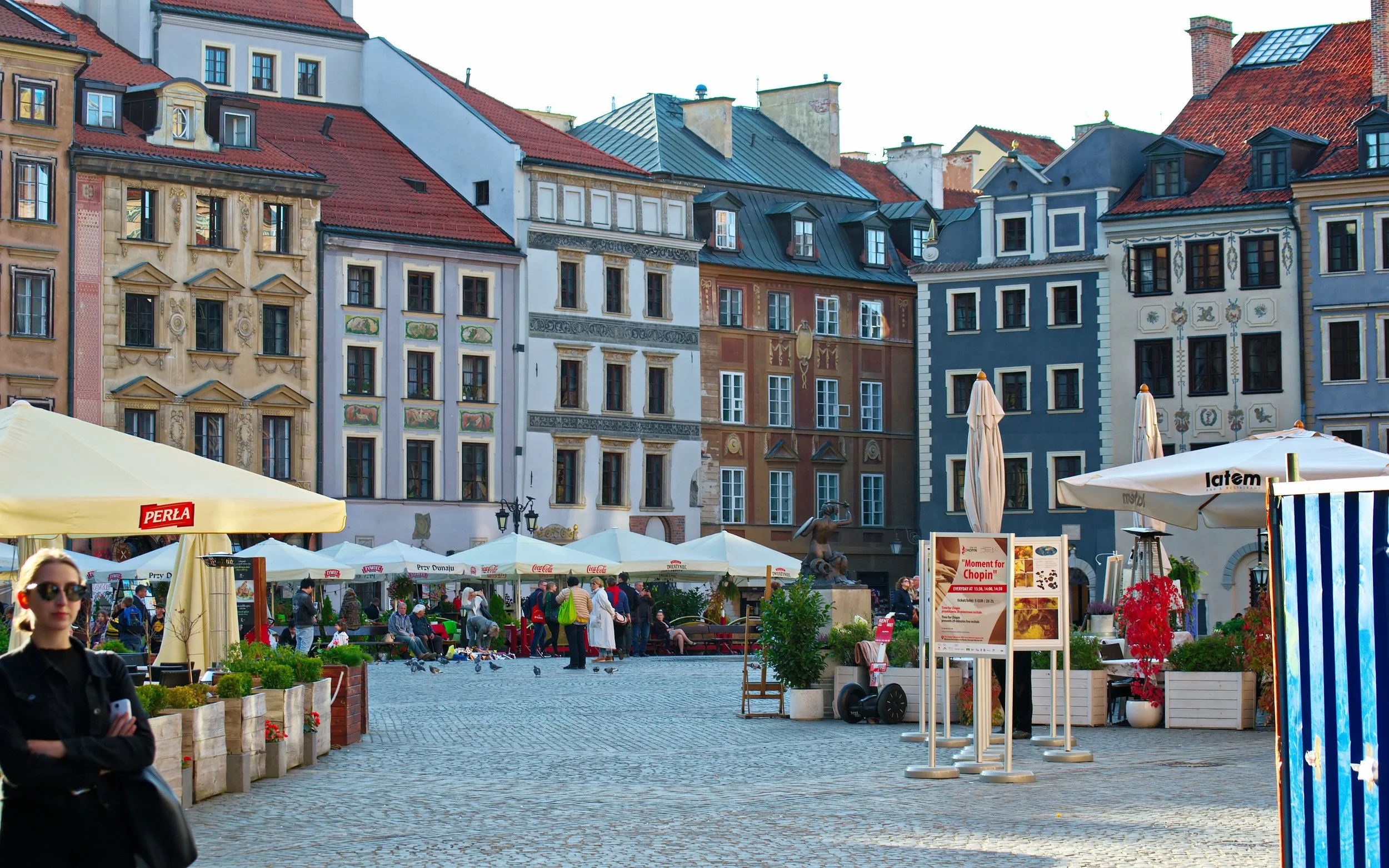
Tourist traps exploit your physical and mental state. They locate themselves where you’re exhausted and hungry, knowing you’ll settle for convenience. They create false urgency with claims like “last table available!” They use picture menus because they make ordering easy but hide quality issues. Multilingual menus in eight languages scream “we don’t serve locals.” And aggressive touts physically pulling you into restaurants are the biggest red flag of all.
Understanding these tactics makes you 80% better at spotting traps before you fall into them.
Red Flags: How to Spot Tourist Traps
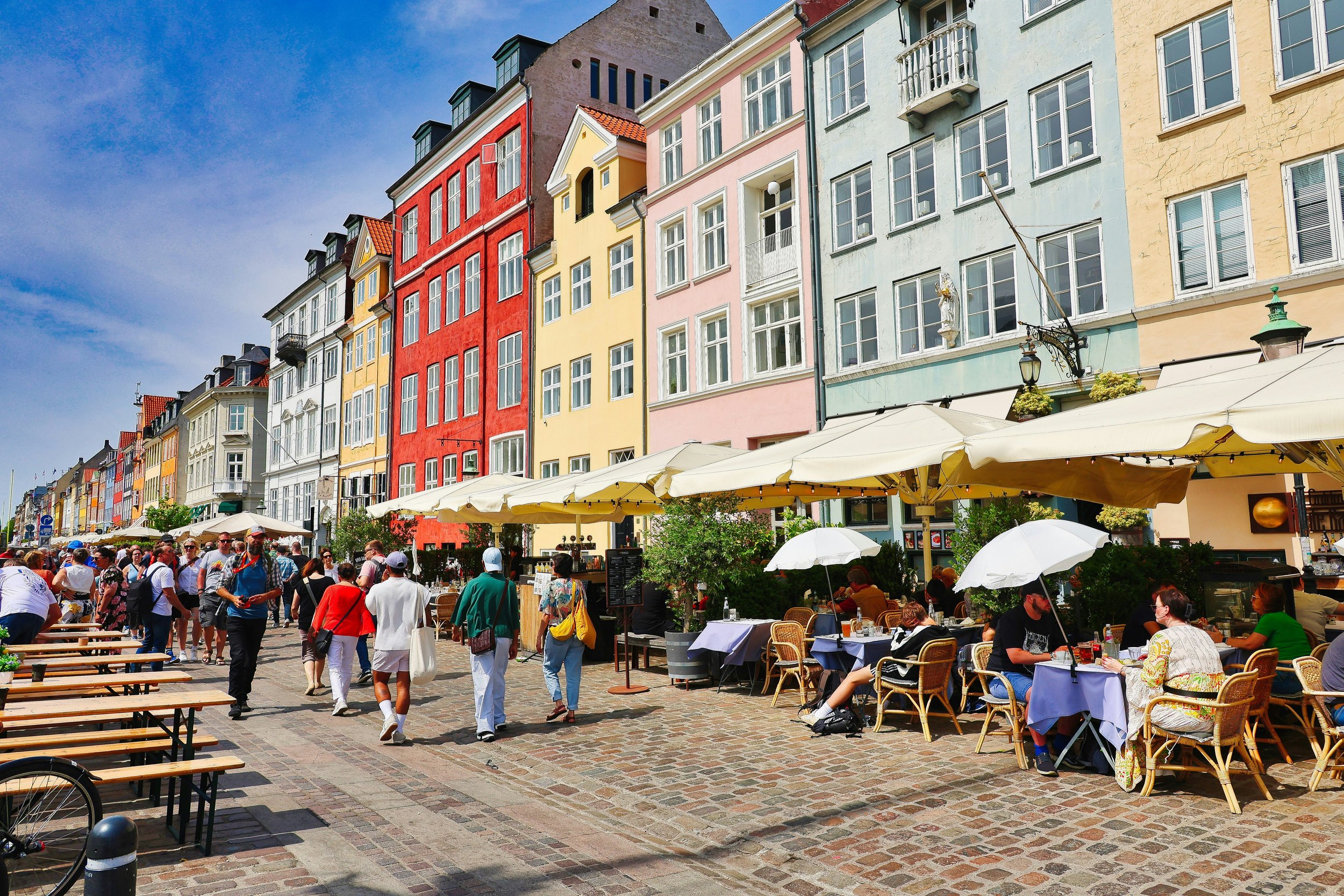
Think of this as your mental checklist when evaluating any restaurant, hotel, or activity.
Restaurant Red Flags
Major red flags (avoid immediately):
-
Touts or hawkers outside aggressively soliciting customers
-
Picture menus in 8+ languages
-
Located on the most touristy square or street
-
No locals eating there (look around)
-
Prices not listed on the outside menu
-
“Authentic [cuisine]” plastered everywhere (authentic places don’t need to announce it)
Warning signs (investigate further):
-
Only tourists appear in reviews (check reviewer locations)
-
Generic positive reviews like “great food, nice place”
-
Menu has 50+ items (jack of all trades, master of none)
-
Staff speaks perfect English but no local language
-
Multiple restaurants with identical menus in the same area (chains disguised as local spots)
Good signs:
-
Locals eating there, especially families
-
Menu changes seasonally or has daily specials
-
Focused menu (20-30 items maximum)
-
Reservations required or natural wait times
-
Located one neighborhood over from the main tourist area
Hotel and Accommodation Red Flags
Major red flags:
-
Too-good-to-be-true prices compared to neighboring properties
-
All 5-star reviews posted within the same week
-
Reviews mentioning “free drink for review”
-
Professional photos but reviews mention outdated or dirty rooms
-
Overly defensive responses to negative reviews
Warning signs:
-
Reviews only from first-time TripAdvisor or Google users
-
Reviews using similar phrases (copy-pasted templates)
-
No reviews mentioning specific staff names or details
-
Reviews focusing solely on location with nothing about service or quality
Good signs:
-
Mix of ratings (3-5 stars is natural and honest)
-
Detailed negative reviews with specific issues addressed
-
Recent reviews confirming photos are accurate
-
Management responding professionally to criticism without being defensive
Activity and Tour Red Flags
Major red flags:
-
Sold by people approaching you on the street
-
“Free” tours that pressure tips heavily at the end
-
No online presence or bookable website
-
Uses pressure tactics like “last spots available today”
-
Significantly cheaper than all competitors (usually a bait and switch)
Warning signs:
-
Large group sizes (30+ people)
-
Reviews mentioning aggressive upselling throughout
-
Includes “shopping stops” where the guide gets commissions
-
Generic itinerary promising to “see the highlights”
Good signs:
-
Small group sizes (8-15 people)
-
Licensed guide with credentials clearly displayed
-
Specific itinerary with timings provided upfront
-
Reviews mentioning guide names and specific stories they shared
-
Bookable through reputable platforms
Shopping Red Flags
Major red flags:
-
Your taxi or tour driver recommends a specific shop
-
Claims to be a “special government shop” (these don’t exist)
-
“Closing sale” that’s been running for months
-
Pushy sales tactics with “today only” pricing
-
No price tags displayed (negotiation expected means wildly inflated starting prices)
When in doubt, if something feels “too touristy,” it probably is. Trust your gut.
The “One Neighborhood Over” Strategy
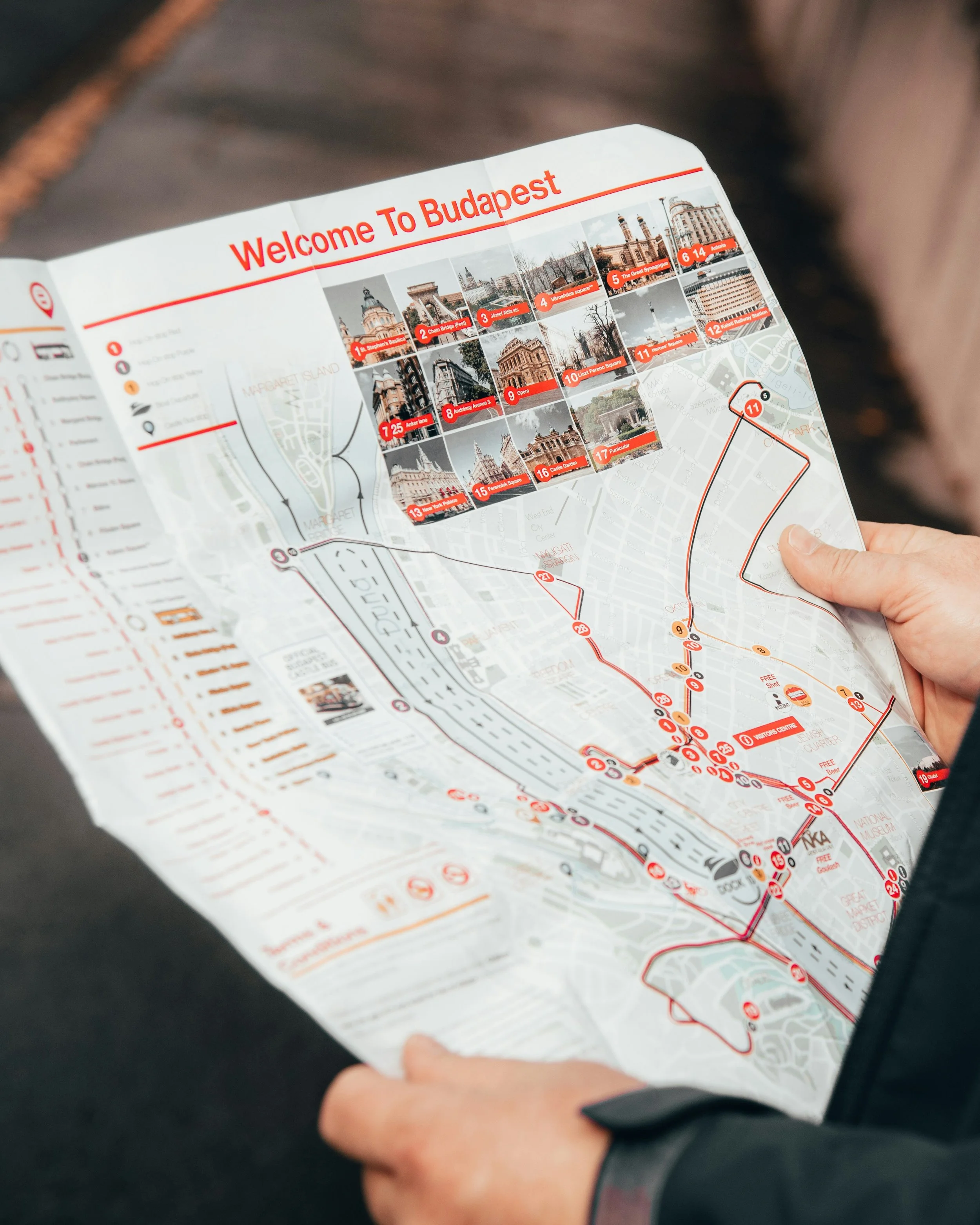
This is possibly the most powerful yet simple strategy for avoiding tourist traps.
The Concept
Instead of eating, staying, or shopping in the most touristy area, go literally one neighborhood over. That’s it.
Why does this work so well? Rents are 40-60% cheaper in adjacent neighborhoods, which means restaurants can focus on quality instead of volume. Locals actually live and eat in these areas. Prices reflect local standards rather than tourist premiums. And you get to see actual neighborhood life instead of a tourist theme park.
How to Implement
First, identify the tourist epicenter. Where are the major attractions? Where do tour buses drop people off? Where are the crowds thickest?
Next, open Google Maps and zoom out slightly. Look for neighborhoods about 10-15 minutes walking distance away. Check for residential indicators like grocery stores, local cafes, and schools.
Then research that specific neighborhood. Search for “[neighborhood name] + restaurants” rather than “[attraction name] + restaurants.” Look for blog posts or Reddit threads specifically about that area.
Real Examples
Rome: The tourist trap zone includes streets around the Trevi Fountain, Piazza Navona, and the Pantheon. One neighborhood over? Monti (10 minutes from the Colosseum) or Trastevere. The result: same quality food, 30-40% cheaper prices, and an infinitely better atmosphere.
Paris: The tourist trap zone surrounds the Eiffel Tower. One neighborhood over? The Rue Cler area with its local market street, or the Marais district. Our Paris guide covers these neighborhoods in detail. The result: authentic bistros, real bakeries, and actual neighborhood feel.
Barcelona: The tourist trap zone is La Rambla and immediately surrounding streets. One neighborhood over? El Born or Gràcia. The result: where Catalans actually eat, with better food at better prices.
Santorini: The tourist trap zone is the main caldera path in Oia during the day. One neighborhood over? Side streets of Fira, or the village of Firostefani. Our Santorini guide details these alternatives. The result: same incredible views, fewer crowds, and significantly better prices.
This strategy works everywhere. The touristy center is rarely where locals spend their time.
Using Local Resources for Research
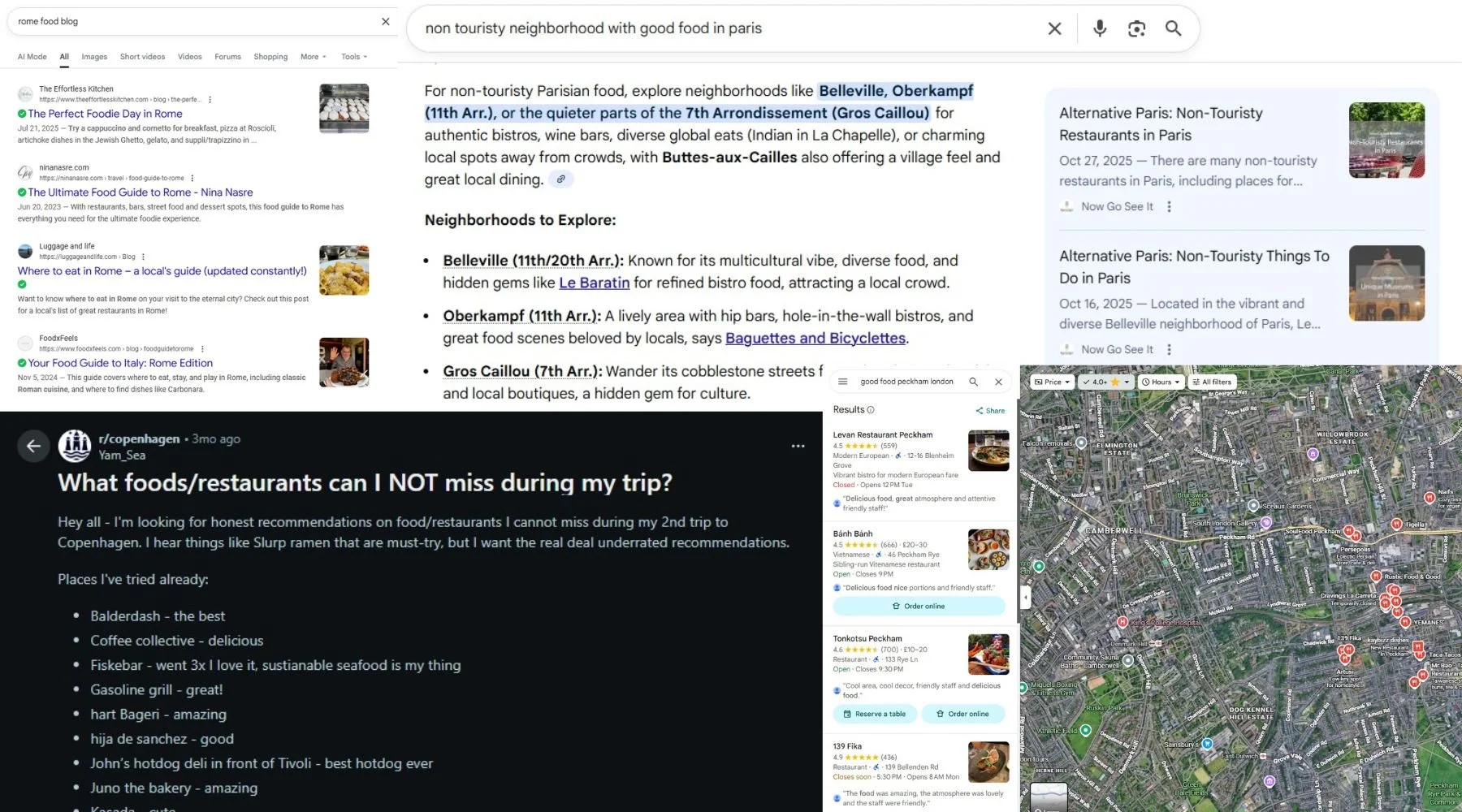
The platforms you use for research matter just as much as what you’re searching for.
Strategy 1: Reddit (The Unfiltered Truth)
Reddit works because there’s no financial incentive to lie. Locals call out tourist traps immediately, you get recent honest experiences, and you can ask specific questions in real time.
Search Reddit effectively using this format: site:reddit.com [city] restaurant recommendations locals
Check these subreddits:
-
r/[cityname] (like r/rome or r/paris)
-
r/travel (search by destination)
-
r/solotravel or r/TravelNoPics for more authentic discussions
Look for posts from locals (verify by checking their post history), recent threads from the last six months, consensus recommendations mentioned multiple times across threads, and specific neighborhood mentions.
Watch out for red flags on Reddit too: brand new accounts recommending a specific place could be guerrilla marketing, and overly enthusiastic posts without specific details raise suspicion.
Example search: site:reddit.com rome restaurants Trastevere -tourists
Strategy 2: Local Food Blogs and Instagram
Google “[city] food blog” along with “local” or “resident” to find blogs written by people who actually live there, not travel bloggers passing through for three days.
On Instagram, search the location tag, filter by “recent” rather than “top,” and look for posts in the local language. This surfaces content from actual residents.
Verify they’re actually local by checking if their post history shows consistent local content over months or years, if they write in the local language or mix it with English, and if they mention neighborhood spots rather than just major attractions.
Strategy 3: Google Maps (Used Correctly)
The right way to use Google Maps: Don’t search “restaurants near Eiffel Tower.” Instead, search “[neighborhood name] bistro” or a specific cuisine type.
Filter smartly. Sort by reviews, but actually read them instead of just trusting the star rating. A restaurant with 50 reviews and a 4.8 rating is often more trustworthy than one with 500 reviews and a 4.5 rating. Check the “busy times” feature because if locals eat there, it’s packed during local meal times (not tourist lunch hours).
Red flags in Google reviews include all reviews in English, generic reviews saying just “good food,” and multiple reviews posted on the same day or week.
Good signs include reviews in multiple languages (locals review too), specific details like “the carbonara was perfectly creamy,” and photos uploaded by different reviewers showing consistent quality.
Strategy 4: Ask Locals (But Ask the Right People)
Who to ask:
-
Hotel staff at non-touristy hotels (not chains in the tourist center)
-
Shop owners in local neighborhoods
-
Your Airbnb host (if they actually live in the city)
-
Uber or taxi drivers (but not ones parked at tourist sites waiting for fares)
Who NOT to ask:
-
Tour guides (often have commission arrangements)
-
Hotel concierges at luxury hotels in the tourist center (commission agreements are standard)
How to ask: “Where do YOU eat when you’re off work?” or “Where do locals go for [specific cuisine]?” or “What neighborhood should I explore for authentic restaurants?”
Always verify any recommendation by Googling it and checking reviews to make sure it’s not listed on every tourist blog.
Our Verification Process for Recommendations
This is the exact process we use before recommending any hotel, restaurant, or activity to clients. It takes 30-60 minutes per recommendation, which is why we only recommend places we’d actually go ourselves.
Our 6-Step Verification System
Step 1: Cross-Reference Multiple Sources We check Reddit, local blogs, Google Maps, and Instagram. If something appears positively across all sources, it’s likely legitimate. If it only appears on TripAdvisor or major travel blogs, we investigate further.
Step 2: Review Deep-Dive We read at least 30-50 recent reviews from the last six months. We look for patterns in negative reviews because consistent issues indicate real problems. We check reviewer profiles because first-time reviewers are suspicious. We look for specific details in positive reviews because generic praise often indicates fake reviews.
Step 3: Local Language Check We search the restaurant or hotel name in the local language and check local review sites (like TheFork in Europe or Tabelog in Japan). If locals review it positively, that’s a strong signal.
Step 4: Price Verification We compare prices to the neighborhood average. If something is 30% or more expensive than its surroundings without a clear reason, it’s likely a tourist trap. If it’s significantly cheaper, we investigate quality concerns.
Step 5: Recent Visit Confirmation We check for recent posts and reviews from the last one to three months. Restaurants change management, quality can decline, and recent reviews confirm the current state.
Step 6: On-the-Ground Verification (When Possible) When we’re in a destination, we look at who’s eating at a restaurant when we pass by. We check if locals are present. We observe the service style and atmosphere firsthand.
Red Flags That Disqualify Immediately
Evidence of fake reviews (timing patterns or generic language), consistently mentioned serious issues (cleanliness, safety, or aggressive staff), only foreigners reviewing with no local presence, management responding defensively to all criticism, or a recent drastic quality drop in reviews all disqualify a recommendation immediately.
What We Look For (Green Lights)
A mix of tourists and locals, specific detailed positive reviews, acknowledged minor flaws (which shows authenticity), consistent quality over time, professional responses to negative reviews, and positive mentions by local sources all indicate a legitimate recommendation.
This verification process is why our recommendations are trustworthy. We’ve done the hours of research so you don’t have to.
Quick Reference: The Anti-Tourist Trap Checklist
Save this checklist for your next trip.
Green Lights (Good Signs)
✓ Locals eat, stay, or shop there ✓ Reviews in multiple languages including the local language ✓ Specific detailed reviews mentioning staff names or dishes ✓ Located one neighborhood away from the main tourist area ✓ Menu changes seasonally or has daily specials ✓ Reservations required or natural wait times ✓ Professional but friendly responses to negative reviews ✓ Mentioned positively on local Reddit threads ✓ Prices match neighborhood standards ✓ Mix of ratings (not all 5-stars, which isn’t natural)
Red Flags (Avoid)
✗ Touts or hawkers soliciting customers ✗ Picture menus in 8+ languages ✗ Located on the most touristy square ✗ All reviews posted within the same time period ✗ Generic positive reviews with no specifics ✗ Defensive responses to criticism ✗ Significantly more expensive than surroundings ✗ “Authentic” plastered everywhere ✗ Only appears on tourist blogs or TripAdvisor ✗ Too good to be true (price or availability)
If you hit three or more red flags, walk away. If you see three or more green lights, you’re probably safe.
Common Questions
Can tourist traps ever be worth it for the experience? Sometimes, if you go in with your eyes open. Harry’s Bar in Venice is touristy and expensive, but it invented the Bellini, so one drink for the history is reasonable. Just don’t expect undiscovered authenticity or good value. Know what you’re paying for.
How do I find authentic food if I don’t speak the language? Use the strategies above (Reddit, local blogs, Google Maps with local language searches). Also look for places where locals are eating. You can point at what others are having if needed. Our destination guides include specific phrases and neighborhoods for each location.
Are ALL restaurants near major attractions tourist traps? Not all, but most. Some legitimate places exist in tourist areas but charge premium prices for the location. Decide whether convenience is worth the markup to you.
What about restaurants recommended by the hotel concierge? Luxury hotel concierges often have commission arrangements with specific restaurants. Instead of asking “Where should I go?” try asking “Where do YOU eat on your day off?” You’ll get more honest recommendations.
Is it rude to walk away from a tout trying to get me into a restaurant? Absolutely not. A polite but firm “No thank you” while you keep walking is perfectly acceptable. You don’t owe anyone your business.
How do I know if a cooking class or food tour is authentic? Check whether it takes place in someone’s actual home or a commercial kitchen, look at group sizes (smaller is better), and see if reviews mention learning actual techniques versus just eating. Avoid tours with “shopping stops” where the guide gets commissions.
What if the tourist trap restaurant is my only option, like at an airport or train station? Lower your expectations, stick to simple items that are hard to mess up, and know you’re paying for convenience. Pack snacks when possible for situations like this.
Should I always avoid TripAdvisor top-ranked places? Not always, but be skeptical. Cross-reference with other sources. If something is ranked number one on TripAdvisor AND recommended on local Reddit threads and blogs, it’s probably legitimate.
The Bottom Line
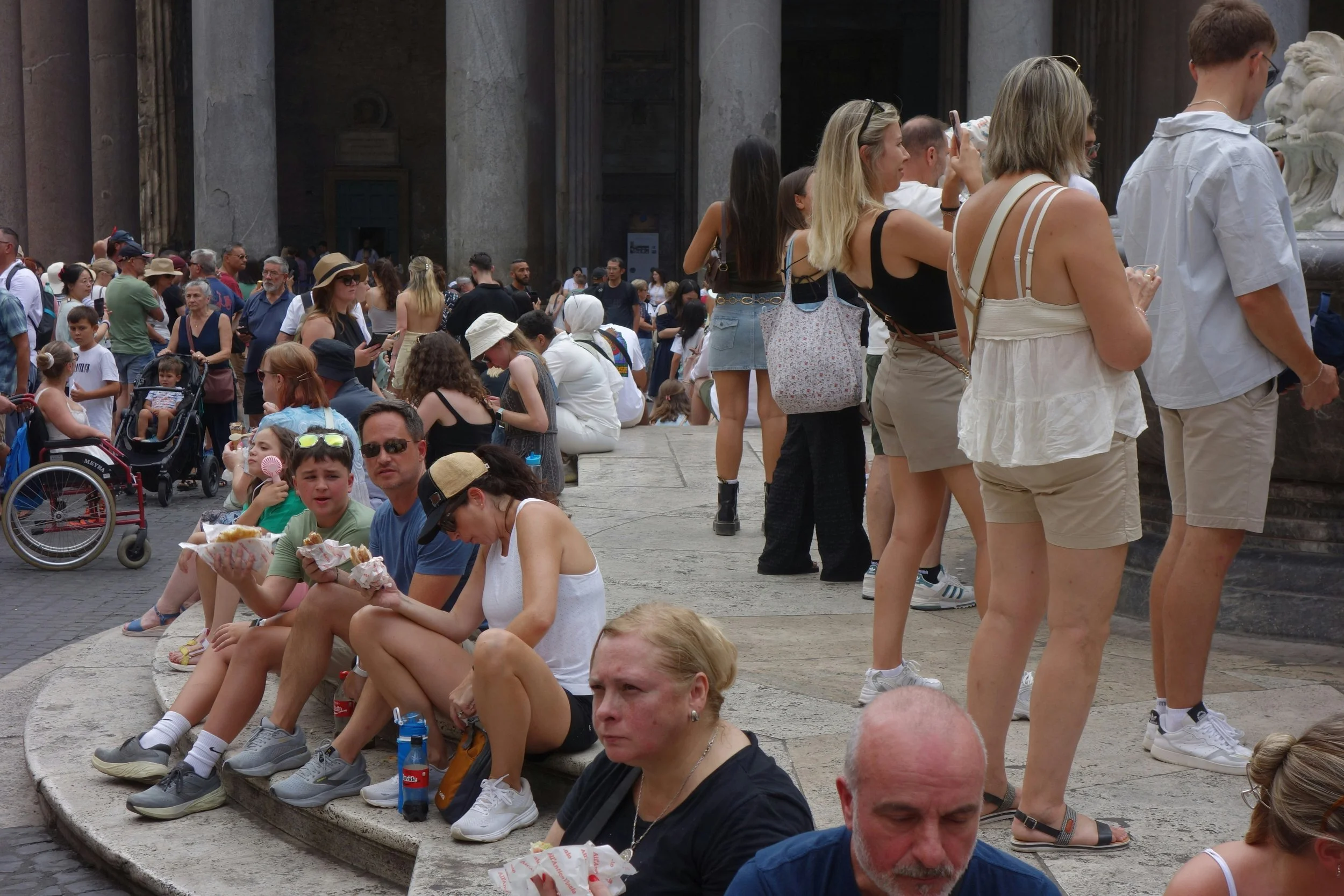
The best travel experiences aren’t listed in guidebooks or TripAdvisor top 10 lists. They’re usually one neighborhood over, where locals actually live their lives.
The key strategies: understand how tourist traps game the system so you can spot their tactics, learn the red flags (touts, picture menus, no locals present), use the “one neighborhood over” strategy consistently, research using Reddit, local blogs, and Google Maps correctly, cross-reference multiple sources before booking anything, and trust your gut when something feels too touristy.
Before your next trip, search Reddit for “[city] tourist traps” and “[city] local restaurants.” Screenshot the checklist above for reference while traveling. Walk one neighborhood away from major attractions. Look for where locals are actually eating, staying, and shopping.
Want to skip the research and tourist trap minefield entirely?
We verify every hotel, restaurant, and activity before recommending it. Our research process takes hours per destination so you can travel confidently knowing you’re getting authentic, quality experiences. We’re currently waiving planning fees when you book through our partner network.
Book a free consultation to get started on your next trip.